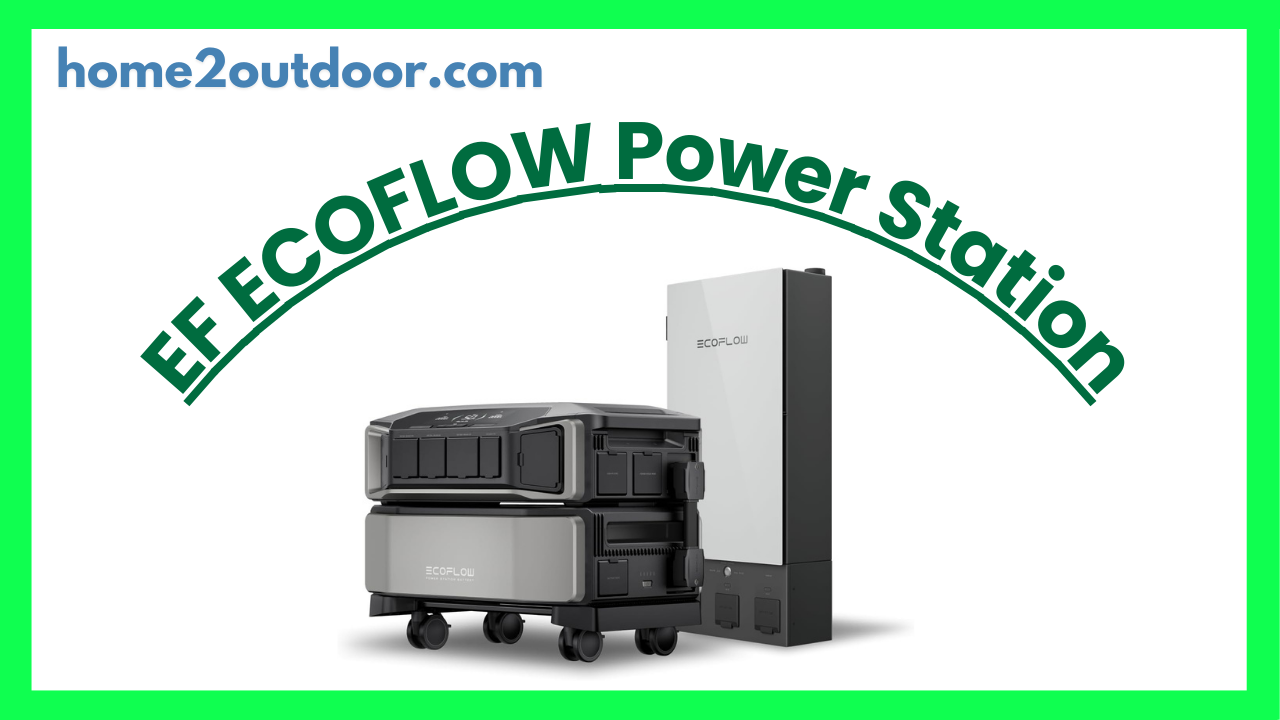
Here’s a detailed, balanced review of the EcoFlow DELTA Pro Ultra (6,144 Wh) with Smart Home Panel 2 — its strengths, weaknesses, and what kinds of users it’s best suited for.
Overview & Key Specs
The DELTA Pro Ultra is EcoFlow’s flagship modular home backup / off‑grid power system. In its basic configuration, it includes:
- 6,144 Wh (≈ 6.14 kWh) LiFePO₄ battery module.
- A matching inverter unit capable of high AC output (EcoFlow advertises up to 6,900 W in some marketing materials)
- Expandability: you can scale the storage to tens of kilowatt‑hours (EcoFlow mentions up to ~30 kWh, and other sources suggest even higher with many modules)
- Multiple charging methods: AC grid input, solar input, generator, etc.
- Integration with Smart Home Panel 2 to tie into your home’s breaker circuits, enabling prioritized circuit management and smoother switchover during outages.
In short: it’s built for serious users who want to treat it as a whole‑home (or large partial‑home) backup and energy management system rather than just a “power station.”
What Works Well (Strengths)
- High capacity & scalability
Even at the base 6 kWh, you can run essential circuits for hours (or longer, depending on load). And the modular design lets you scale up if you need days of autonomy. - Strong inverter and surge handling
In testing, the unit managed heavy loads like fridges, microwaves, ovens, etc., even in combinations. Some tests pushed it beyond spec and it held briefly, indicating good overhead for surges. - Quiet operation under light loads
Particularly under lower loads, noise is minimal — a big plus if this is indoors or near living spaces - Seamless switchover / UPS capability
As marketed, it features online UPS mode (very fast switchover) to avoid interruption to sensitive electronics. - Smart control & circuit prioritization
With the Smart Home Panel 2, you can assign which circuits should be powered first (e.g. refrigerator, medical devices) during an outage. That granular control is a strong feature for home integration. - Safety and battery longevity
Using LiFePO₄ chemistry, which generally offers high cycle life and safer thermal behavior vs. older lithium types. EcoFlow advertises 3,500+ cycles to 80 % capacity.
What Doesn’t Work as Well / Trade‑offs (Weaknesses & Caveats)
- High cost & total system cost
The base unit already commands a premium price. Add the Smart Home Panel, extra batteries, installation, wiring, etc., and it becomes a substantial investment. Some reviewers warn that depending on your needs, costs can escalate quickly. - Weight, footprint, and installation complexity
The system is not trivial to move or mount. You’ll almost certainly need professional installation for wiring and integration into your home.
Also, Smart Home Panel 2 has a limit on number of circuits (12 circuits in some accounts), which might not suffice for many homes. - Charging speed discrepancies
While marketed with aggressive charging specs, real‑world tests show that charging from an AC source is slower than spec. One test reported ~4 hours 4 minutes to charge the 6 kWh battery (rather than the ideal 2 hours) using AC.
Also, pass‑through behavior has some quirks: in testing, the generator‑port (L14) did not support pass‑through while charging. - Edge cases & high‑surge loads struggle
While many household loads are handled well, in lab testing, extremely surge‑heavy tools (e.g. car lifts) were problematic. - Support, logistics, and reliability concerns from users
In user forums, complaints include long delays in installation, inconsistent customer service, units tripping or shutting down, parts or batteries delayed, and firmware or support issues.
Some report the Smart Home Panel (SHP) relay failures, communication issues, or system instability if parts fail.
One user said: “I’ve spent more ~ $10,000 and I’m still not sure if it works.” - Solar input limitations & compatibility constraints
Despite the high storage capacity, the maximum solar input (5,600 W in some descriptions) might limit how fast you can replenish via solar in strong sun days.
Also, accessories from older EcoFlow systems (e.g. Delta Pro) may not be fully compatible with Ultra. - Firmware, app or configuration quirks
Some users report confusion or limitations in the control logic or automation in the app, or inconsistencies in how pass‑through or UPS modes behave.
Use Cases Where It’s a Strong Fit (and Where It Might Be Overkill)
Ideal for:
- Homes in areas with frequent or extended power outages, where having days (not just hours) of backup is desired.
- Off‑grid or near‑off‑grid homes or cabins that want modular expandability and integration with solar.
- Users who want fine control over which circuits are powered during outages and want a more “smart home” style backup.
- Situations where quiet operation is important (bedrooms, offices, living rooms).
Less ideal / overkill for:
- Small apartments or users who just need a few hours of backup for essentials—cheaper smaller systems might suffice.
- Users who want plug‑and‑play simplicity with minimal wiring or installation. The Ultra + SHP2 approach involves complexity.
- Environments where support, parts availability, or long shipping times are problematic (remote regions).
My Take & Recommendation
The DELTA Pro Ultra + Smart Home Panel 2 is a powerhouse with ambition. It aims to move portable battery systems closer to fully integrated home battery systems. In many respects, it delivers: solid performance, modular scalability, and strong design. The quieter operation and good handling of typical household loads are big pluses. In controlled testing, its surge handling and inverter capabilities are impressive.
However, the real world is messy, and the system is not without its growing pains. The division between ideal specs and measured performance (especially in charging) should be acknowledged. More concerning are the user reports about customer support, delays, and potential component failures — for a system at this price point, that risk has to be factored.
If I were advising someone seriously considering this, I’d say:
- Do your homework: ensure you have a qualified electrician, assess your load and circuit count, and understand how many expansion batteries you truly might need.
- Check vendor support & warranty in your region: how well can EcoFlow back you locally? Parts, service, updates.
- Plan for margins and redundancy: don’t size it too tightly; leave buffer for unforeseen surges or efficiency losses.
- Test under load after installation: push it with combined appliance loads and check stability, transitions, and behavior in real operation.
If reliability and local support are solid in your location, this system is among the most capable “off the grid / backup home power” options you’ll find. But it’s not without risk, especially for buyers in regions with less robust support networks.