Here’s a detailed review of the Hiluckey 25,000 mAh Solar Charger (with 4 solar panels), drawn from spec sheets, user reviews, and hands‑on impressions. I’ll cover strengths, weaknesses, and whether it might be a good fit for your needs.
Key Specs & Promised Features
From listings and product descriptions, here are the main features:
| Feature | What’s Claimed / Typical |
|---|---|
| Battery capacity | 25,000 mAh (Li‑ion / Li‑polymer) |
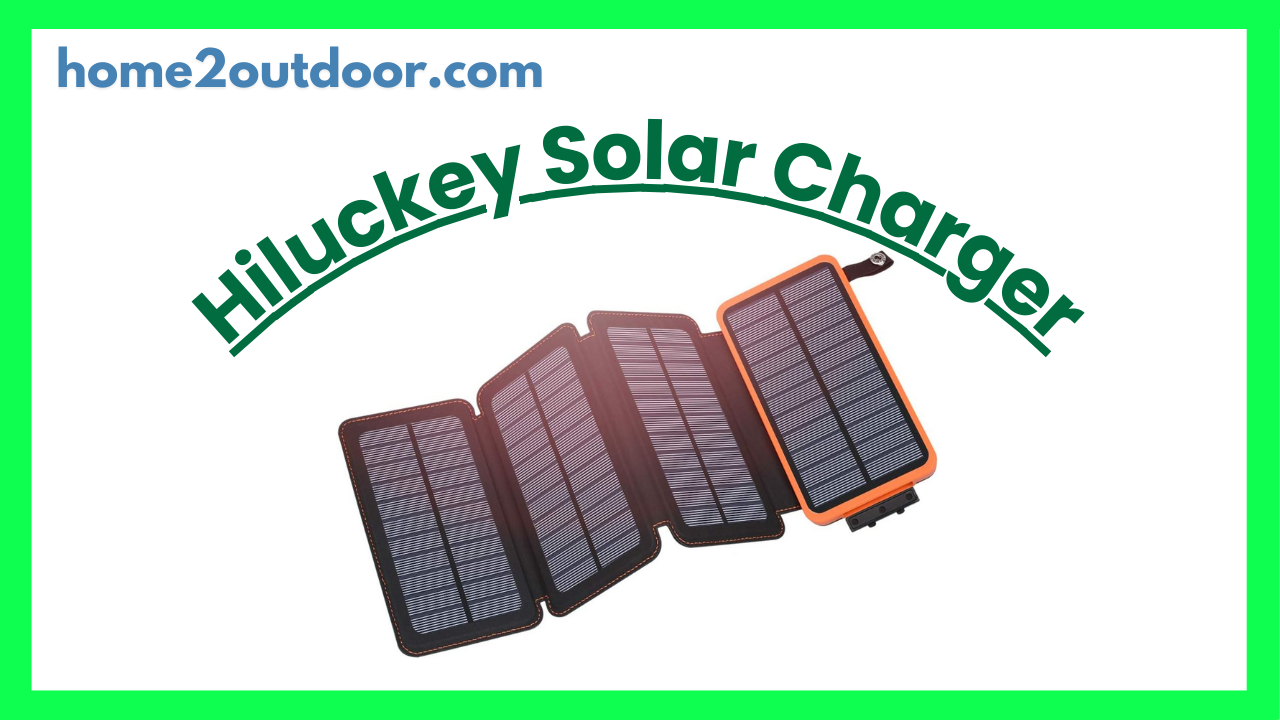
| Solar panels | 4 foldable solar panels, used to recharge the internal battery (or top up in sunlight) |
| Output ports | Typically 3: 1 × USB‑C + 2 × USB‑A |
| Fast charging / output | Some listings claim “15 W output” or “upgraded fast charging” |
| Input / recharge | USB‑C input (and output) — fully recharging via USB may take ~ 8 hours under good conditions |
| Physical / ruggedness | Shock/dust/splash resistance (but not fully waterproof) |
| Additional features | Built‑in flashlight, compact foldable design, ability to hang or attach via loops / carabiner |
From user reviews and third‑party sites, we can see how these claims hold up in practice.
What Works Well / Strengths
1. High capacity, good for multiple charges
Because of its 25,000 mAh battery, this charger can charge a typical smartphone multiple times (6–8 charges is often cited) before it itself runs out.
This makes it handy for multi‑day trips, camping, or in regions with frequent power cuts.
2. Decent USB recharge speed
While solar charging is slow (see caveats below), users report that using a good USB‑C / PD input, the unit can fully recharge in ~6–8 hours under ideal conditions.
This helps ensure that you can “top it off” when you have access to mains or USB power.
3. Multiple outputs & simultaneous charging
Having 3 output ports (USB‑C + 2 × USB‑A) is convenient, especially when you have more than one device (phone + power bank + small gadgets) to charge.
4. Rugged for outdoor use (to a degree)
The build is often described as sturdy or “rugged,” and it’s designed to handle the bumps, dust, or light splashing common in outdoor settings. Some reviews appreciate that the outer casing and panels seem solid.
The splash / dust resistance is a useful safeguard (though not foolproof).
5. Useful secondary features
- The built‑in flashlight is a nice emergency tool in camps or during outages.
- The foldable panel design helps with portability: you can compact it down for carrying or unfold to get more sunlight.
- It also includes or supports attachment methods (loops, or use of a carabiner) so you can hang it on a backpack in sun.
Weaknesses, Limitations & Real‑World Drawbacks
1. Solar charging is slow / inefficient (especially from zero)
This is perhaps the most common criticism. Many users say the solar panels are useful only for topping off, not recharging from empty.
For example, one listing says it may take 2 days under strong sun to fully charge via solar panels.
Another review: “I set this unit outside for about 20 minutes in full sun … it was so hot … the solar feature was very worrisome” — demonstrating thermal or inefficiency concerns.
Some reports say if the internal battery is completely drained, solar won’t reliably revive it.
Thus, the solar panels should be treated more as an auxiliary / emergency option, not a primary charging method.
2. Actual capacity / efficiency often lower than claimed
As with many high-capacity battery products, the usable output (after losses, voltage conversion, heat, etc.) is less than the raw 25,000 mAh spec. Some users report fewer full device charges than expected.
Other reviews report that the device doesn’t hold full charge well over time, or loses capacity.
3. Mixed reliability & quality control
Some users report units that fail entirely, output ports that stop working, or inconsistencies in performance between identical units.
One user claimed the power bank “doesn’t work at all” after a short time.
Also, customer support is a frequent complaint: slow responses or no support in some cases.
4. Lack of full waterproofing / vulnerable to weather extremes
While splash and dust resistance is often claimed, it’s not fully waterproof.
Exposing it to heavy rain, immersion, or sustained moisture is risky. The solar panels themselves may degrade under harsh UV, heat, or moisture over time.
5. Bulk and weight trade‑offs
Because of its size and battery capacity, it’s heavier and bulkier than smaller power banks (especially ones without solar). For minimalist travel or light packing, this may be a drawback.
6. Solar panels’ angle, orientation, and conditions matter a lot
To get decent performance from solar, you need strong direct sunlight, correct angle, and minimal shading. In cloudy weather or low sun angles (e.g. early morning, late evening), the charging rate may drop drastically. This is true for many solar chargers, not just this one. (Also noted in user reviews)
Thus, in areas with frequent cloud cover or rainy seasons, solar may not be very effective.
Real‑User Feedback & Anecdotes
- Some users praise the rugged feel, saying the product is “solid,” “durable,” and “worth the price.”
- However, there are reviews where the solar panels underperform severely, or the device fails after a few uses.
- The flashlight is often mentioned as a handy but modest bonus—not a replacement for a good headlamp.
- One review detail: you may need to press a power or mode button to “activate” charging before plugging devices in. If you just plug without turning it on, some users said nothing happens.
- Some communities (e.g. preppers / outdoor forums) express skepticism about combining solar + battery in one unit, arguing that separate, more efficient solar panels + battery packs are better. For example: “The solar aspect is almost completely ineffective … even a whole day in full summer sun gave me less than 25% charge.”
“Tiny integrated solar panels produce so little energy they are practically useless.”
These anecdotal reports align with many of the criticisms above: good utility as a power bank with some “bonus” solar capability, but over‑expectation of solar performance can lead to disappointment.
Suitability & Recommendations (Especially for Bangladesh / Tropical / Monsoon Climates)
Given what we know, here’s how well the Hiluckey 25,000 mAh solar charger might serve you in a Bangladeshi / tropical environment (where sun, humidity, occasional heavy rain, and cloudy days are part of the mix).
Pros in this context:
- The high battery capacity is very useful during power outages or long travel days.
- In bright, sunny conditions (especially in dry season or clear days), the solar panels can give useful trickle charge or top-ups.
- The rugged build, shock/dust resistance, and splash resistance help in humid, dusty, or rough outdoor settings.
- Having multiple ports means you can charge multiple devices (phone + small gadgets) in a region where power is sometimes unavailable.
Risks / challenges you’ll face:
- During monsoon or rainy periods (cloudy days, heavy rain), solar may be too slow to matter.
- If the device becomes fully depleted, relying on solar alone to recharge might fail.
- High heat and humidity are tough on battery packs and solar panel materials, so long-term durability is a concern.
- You’ll want to protect it from heavy rain, water immersion, and prolonged exposure to moisture.
- Because of its weight and bulk, carrying it on long hikes in tropical heat might feel heavier.
Recommendations to get the most out of it:
- Don’t rely on solar as your only recharge method — always carry a reliable USB / mains recharge as backup.
- Optimize orientation & exposure — when using solar, angle the panels directly toward the sun, avoid shade, and reorient during the day if possible.
- Partial charging is better than full discharge — keep some stored energy in the battery so that solar can top up rather than trying to bring it from zero.
- Protect from weather — use a dry bag, cover, or shade to reduce exposure to rain, dew, or condensation.
- Check performance early — test the unit soon after purchasing to see whether your unit is good or has defects, so you can return or replace it if necessary.
- Consider modular setup — if solar performance is critical, some people separate the solar panel and the battery pack. That way you can replace or upgrade one without losing both.
Overall Verdict
The Hiluckey 25,000 mAh solar charger is a capable, high‑capacity power bank with a bonus solar charging feature. In many cases, it will work well as a portable battery for phones, tablets, and small USB devices, especially when you have occasional access to USB charging.
However, its solar panels are best seen as an auxiliary / “nice-to-have” feature rather than the core charging tool. If your situation demands heavy reliance on solar (e.g. remote off-grid with no USB access), this unit might fall short depending on weather and sun exposure.
If I were to rate it (considering performance, reliability, price, and utility), I’d give it a 3.5 to 4 out of 5 stars—solid value for many users, but with clear caveats you must be aware of.