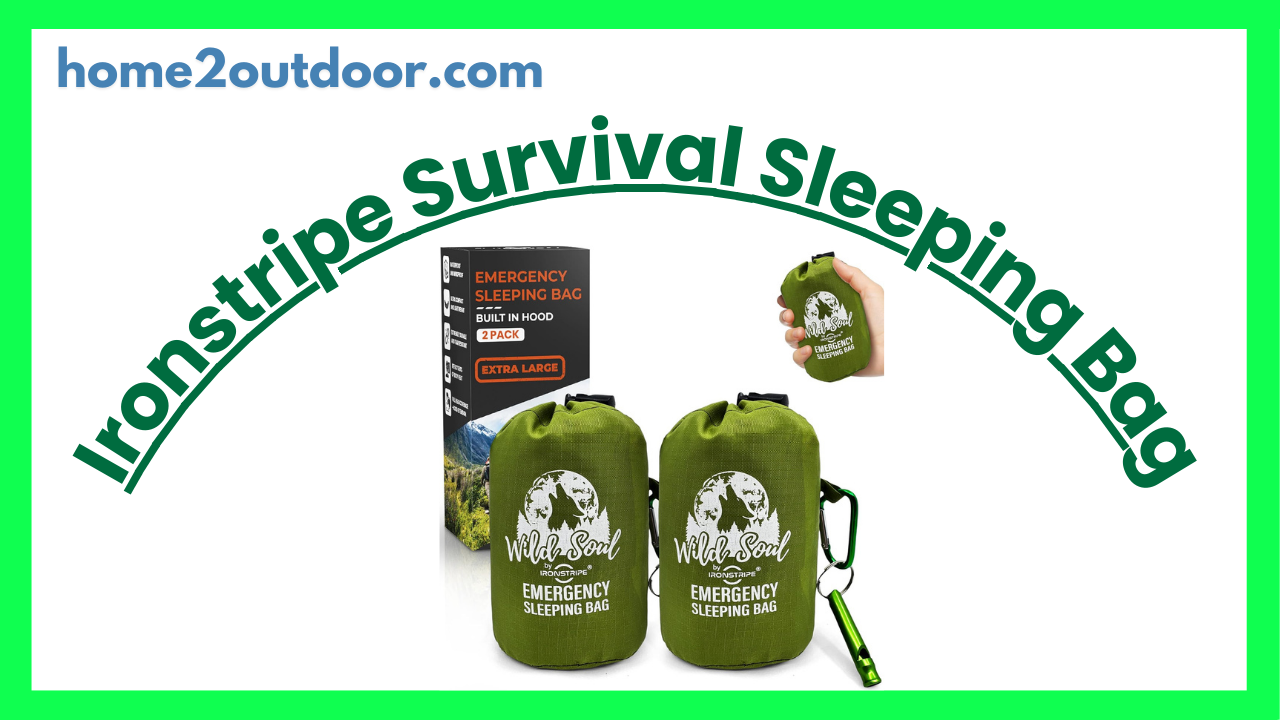
Here’s a detailed review of the Ironstripe XL Bivy Sack Waterproof Survival Sleeping Bag (aka emergency bivvy / sleeping bag), covering its specs, what works well, its limitations, and whether it might be right for someone in places like Bangladesh or other humid/tropical climates.
What It Is / Key Features & Specifications
From product descriptions and user sources, here are the main attributes:
| Specification | What’s Claimed / Measured |
|---|---|
| Size (XL) | Around 240 cm × 125 cm (≈ 94.5 in × 49.2 in) — roomy for many body types. |
| Material | PE material (polyethylene) that is extra-thick, tear-resistant, and puncture-resistant; also lined/coated with thermal mylar for heat retention. |
| Seams & Build | Reinforced wide‑tape seams to improve durability; built‑in hood to help retain heat. |
| Heat retention | The mylar layer claims up to ~90% body heat retention; hood adds another layer of protection. |
| Waterproof/water resistance | Product is advertised as waterproof, protecting against rain, wind, heavy snow, condensation. |
| Packability & extras | Folds into a drawstring pouch; often comes in a 2‑pack with an emergency whistle. |
| Weight | The 2‑pack version is listed as ~1.5 lbs (≈ 680 grams) total. Single piece will be less. |
What Works Well / Strengths
- Size & Comfort (for an emergency bivvy)
The XL size gives you more room than many emergency bivvy options, which are often quite narrow. If you’re tall, or want to use it with some layering, this extra space is helpful. It helps reduce the feeling of confinement. - Heat Retention via Mylar + Hood
The thermal mylar lining is effective at reflecting radiant body heat; it helps prevent heat loss, especially when paired with the hood. For emergencies (cold nights, wind, damp), this feature is particularly valuable. - Durability Compared to Cheapest Emergency Sacks
The material is thicker, with reinforced seams. Many of the complaints about cheaper/Mylar emergency sleeping bags are that they tear, puncture, or the seams open. This model addresses some of those weaknesses. - Waterproof & Weather Protection
In rain, wind, and condensation situations, having waterproof or water‑resistant external layers can make the difference between staying dry (or at least able to rest) vs being soaked. It also helps with protection from unexpected precipitation. - Low Pack Size / Extra Utility
As an emergency item, it’s nice that it folds into a small drawstring pouch. Also, with the emergency whistle included, the 2‑pack option can be useful for “bug‑out” kits, cars, hiking packs, or family gear.
Limitations & Drawbacks
- Material Is Thin / Not Insulated Like Real Sleeping Bags
Although the mylar reflects heat, the bivvy does not have foam or down insulation. That means for very cold conditions (below freezing), or prolonged exposure, it will not replace a proper insulated sleeping bag. It mostly helps in emergency / short‑term situations. - Condensation & Internal Moisture
Because there’s minimal breathability (PE + mylar), moisture from sweat or breathing can condense inside. Over several hours, this can make the interior damp, which reduces thermal comfort. This is a common issue in bivvy / emergency blanket type gear. (While specific user feedback mentions noisiness and condensation issues generally, these are typical trade‑offs.) - Durability Over Multiple Uses
While sturdier than the very cheap options, many reviews suggest that after a few uses the material begins to crease, lose shape, or suffer rubbing/tearing (especially at seams or folds). It is best treated as emergency / occasional gear rather than daily use gear. - Noise / Crinkling Sound
A frequent comment is that the material makes noise (rustling or crinkling), especially when moving. This can make sleep less comfortable or restful. Not a serious safety issue, but a comfort trade‑off. - Bulk vs. Emergency Use
Even though it’s compact compared to a tent, the XL size means more material, more bulk, and slightly heavier than very minimalist bivvies. For ultra‑light hikers who want minimal weight, this might be more than needed. - No Fill / No Padding
Because there’s no padding, you’ll still need a sleeping pad if ground insulation matters. On hard or cold ground, the bivvy alone won’t protect you much from conductive heat loss. Also, discomfort if you lie directly on rough ground.
Suitability / Use Cases
Here are situations where this Ironstripe XL Bivy Sack works well, and where it might not be ideal:
| Good For | Less Ideal For |
|---|---|
| Emergency kits / bug‑out bags | Multi‑night full cold weather camping in freezing environments |
| Rain / wind protection when used with proper padding | Use as main shelter in humid climates where condensation becomes a problem |
| Backup gear in cars, hiking packs | Long‑term use under heavy strain (rocks, sharp debris, frequent folding) |
| Occasional cold nights, unexpected weather changes | Heavy condensation, discomfort due to lack of insulation against ground heat loss |
How It Might Perform in Bangladesh / Tropical / Monsoon Settings
Given Bangladesh’s climate (hot, humid, monsoon rains, occasional cold nights in hillier areas), here’s how this bivy might do, and tips to use it best:
Pros in this context:
- It will help protect you from rain, especially sudden downpours, and wind. Having a waterproof outer layer is very useful in monsoon or heavy rain periods.
- For emergency overnight stays, especially in outdoor or rural areas without tents, it gives you shelter and helps you stay dry.
- It folds up small, so you can carry it without adding too much weight — useful when travelling or walking long distances in rain.
Challenges / what to watch out for:
- Humidity and sweating will cause more internal moisture, maybe making the sleeping environment clammy.
- Without adequate ventilation, heat inside can become uncomfortable.
- If the ground is wet or water gathers, moisture from below might seep in if the ground beneath isn’t insulating. So you’ll still want a sleeping pad or ground sheet.
- After many uses, exposure to UV, mold / mildew, and high humidity may degrade the materials faster.
Tips to maximize its usefulness in tropics / monsoon:
- Use a sleeping pad underneath to help insulate from wet or cold ground.
- Choose a sheltered spot — under canopy or vegetation to reduce direct exposure to rain.
- Ensure proper drainage — avoid gaps, avoid placing directly where water ponds; angle the bivy so water runs off.
- Vent well — leave the hood slightly open (if possible) to let out moist air; avoid closing it fully if heat/humidity becomes uncomfortable.
- Dry it after use — avoid storing the bivy wet; air it out to prevent mildew.
Overall Verdict
The Ironstripe XL Waterproof Survival Bivy Sack is a strong option for emergency shelter: roomy size, good waterproofing, decent durability, and solid heat retention via mylar and hood. It’s best thought of as a “need‑to‑have” backup or emergency layer rather than a primary sleep system for all conditions.
If I were to give it a rating (out of 5) for general emergency / survival use, I’d say ≈ 4.0 / 5 — good value, with the right expectations and used in appropriate conditions.