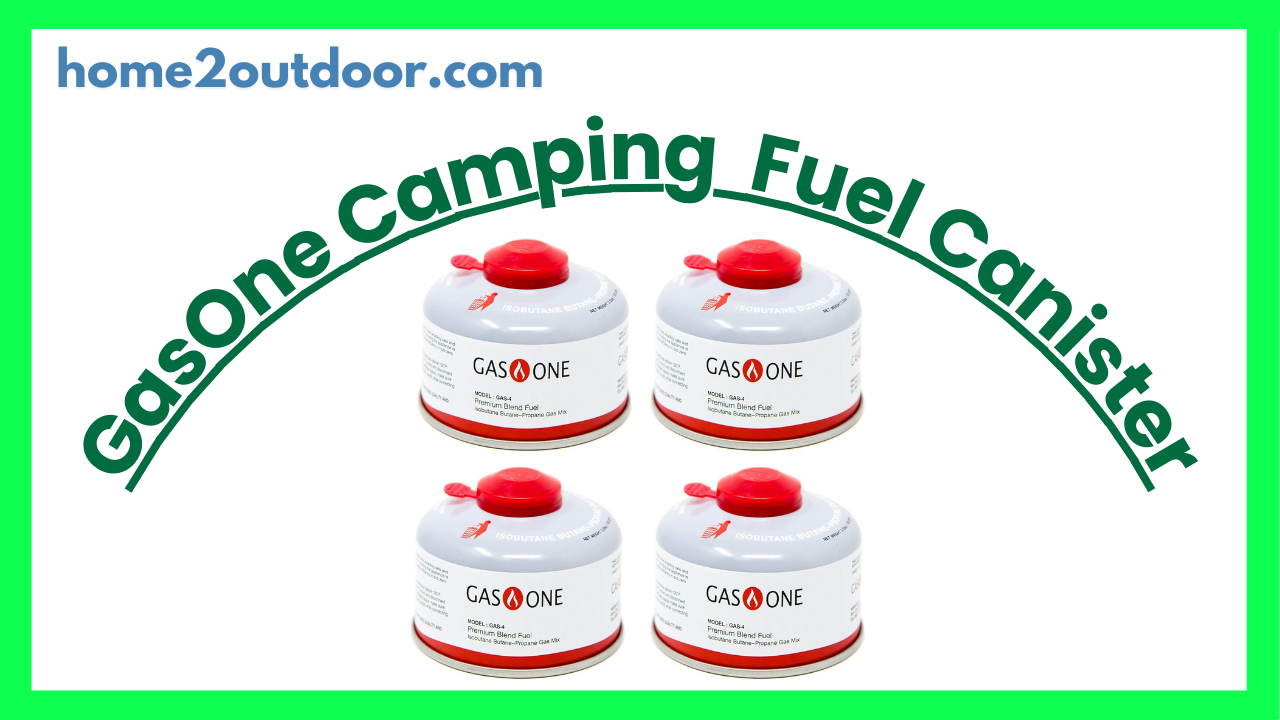
Here’s a review of the GasOne Camping Fuel Blend Isobutane Fuel Canister, covering its claimed features, real‑world performance, pros and cons, and suitability for use (especially in climates like Bangladesh).
What It Is / Key Specs & Claims
From manufacturer listings, seller pages, and user reviews, here’s what the GasOne isobutane fuel canister claims and how it’s presented:
- It’s a blend fuel, combining isobutane (and sometimes a percentage of propane) to improve vapor pressure and cold-weather performance.
- Comes in screw‑on (Lindal‑type) canisters, compatible with many backpacking stoves and burners designed for isobutane/propane cartridges.
- Commonly sold in 100 g size (≈ 3.53 oz) versions; multi‑packs (2, 4 cans) are available.
- The canister is compact; dimensions ~ 3.5 × 2.8 inches (length × diameter) is given in some listings.
- It comes with a plastic cap to help prevent leaks when stored unused.
- It is marketed as “all‑season fuel,” meaning the blend is meant to maintain performance under a wider temperature range than pure butane. The addition of propane is cited as helping boost vapor pressure at lower temperatures.
- It has a strong user rating: for instance, the 100 g (4‑pack) version has ~4.7 / 5 stars on Amazon (2,503 ratings) as of the listing.
What Works Well / Strengths
1. Good compatibility & convenience
Because it uses a standard screw-on / Lindal style valve fitting (common in many backpacking stoves), it’s relatively easy to find compatibility with various stove brands.
The compact size and included leak-prevention cap help for transport and packing.
2. Decent performance in moderate conditions
Many users say that it “does the job” under normal camping conditions (warm to moderate temperatures). The fuel blends tend to maintain pressure better than pure butane, especially as the canister empties.
Some reviewers note that the canister “does not fizz at extreme low temperatures” (i.e. stable flame in colder ambient conditions) in user experience. (Though how “extreme low” is defined is subjective.)
3. Good user feedback & acceptance
With thousands of user ratings averaging high, many campers report reliability, ease of use, and satisfaction.
Because it’s available in multi‑packs and is relatively lightweight, it’s practical for backpacking trips.
Weaknesses, Limitations & Real‑World Concerns
1. Cold-weather / low-temperature performance is limited
Even with a propane blend, isobutane mixtures struggle when it’s very cold. As ambient temperature drops, vaporization slows, pressure falls, and flame weakens or sputters. This is a general limitation of butane / isobutane mixes.
Users in forums report sputtering or erratic flame behavior when attaching or using canisters under certain conditions (tilted angle, cold).
One Reddit discussion:
“If the canister is inverted or tilted a lot you’ll get liquid fuel instead of gas … the fuller the canister is, the less tilt required.”
So in colder nights (or at high altitude) performance may degrade.
2. Possible leak / sealing issues in some units
Some product reviews and listings mention concerns that occasionally a canister may not seal perfectly or there may be minor leakage.
I did not find widespread, definitive “this brand always leaks” complaints, but a few suggest caution.
3. Fuel quantity limit & burn time
Because the canisters are relatively small (100 g), the total burn time is limited. Some users say one canister only lasts for one meal (depending on stove, output, pot size, wind).
Also, if you’re cooking for groups or using it for extended periods, you’ll need multiple canisters — logistics and cost may add up.
4. Price & availability / import constraints
In some markets, imported fuel canisters are expensive (import cost, shipping, hazardous materials regulation). Also, transporting fuel canisters across borders can be restricted or complicated. Some listings discuss “import from US” for their market.
Additionally, since these are considered “dangerous goods,” shipping, customs rules, and extra charges can complicate ordering.
5. Efficiency under poor conditions (wind, high altitude)
Like all small canister fuels, efficiency reduces under wind, when flame is partially blocked, or when altitude/low pressure reduces boil point. You’ll want a windscreen, efficient pot / lid, and careful fuel management. (General caveats for canister stoves.)
Suitability & Recommendations (Especially for Bangladesh / Tropical / Humid Use)
Given climate, terrain, weather conditions in Bangladesh (humid, high temperatures, occasional rain, tropical storms, less frequent extreme cold), here’s how this fuel canister might perform and how to use it best:
Pros in your environment
- Because extremely cold temperatures are rare, the fuel is less likely to suffer critical vaporization issues (as long as it’s not very cold).
- Lightweight and compact — good for trekking, camping in remote areas, where carrying heavy fuel is a burden.
- Compatible with many backpacking / stove systems, making it easier to integrate into a gear setup without needing exotic adapters.
What to watch / mitigate
- Humidity / storage: Ensure the canister is dry, capped, and not exposed to moisture or corrosion — especially in a humid environment.
- Heat / sun exposure: Don’t leave the canister in direct sunlight or extreme heat, as internal pressure could increase or containers degrade.
- Wind & flame stability: Use windshields and lean to reduce flame loss or inefficiencies.
- Test before trips: Always test your stove + fuel combinations before going on long trip so you know performance.
- Carry extra fuel: Given limited burn time, carry extra canisters or have backup fuel.
- Check local fuel import or regulation: In Bangladesh, fuel canisters might be regulated or restricted; check customs, transport, and airport rules.
- Temperature variations: Even in tropical climates, nights in higher altitude places might get cool; in such cases, the fuel’s vaporization may be less ideal — but likely manageable.
Overall Verdict
The GasOne Camping Fuel Blend Isobutane Canister is a solid mid-range fuel option for outdoor cooking in moderate conditions. It offers good compatibility, decent performance, and favorable user feedback. Its main weaknesses are inherent to the type of fuel (isobutane blends) — cold temperature performance, limited fuel capacity per canister, and occasional sealing issues.