
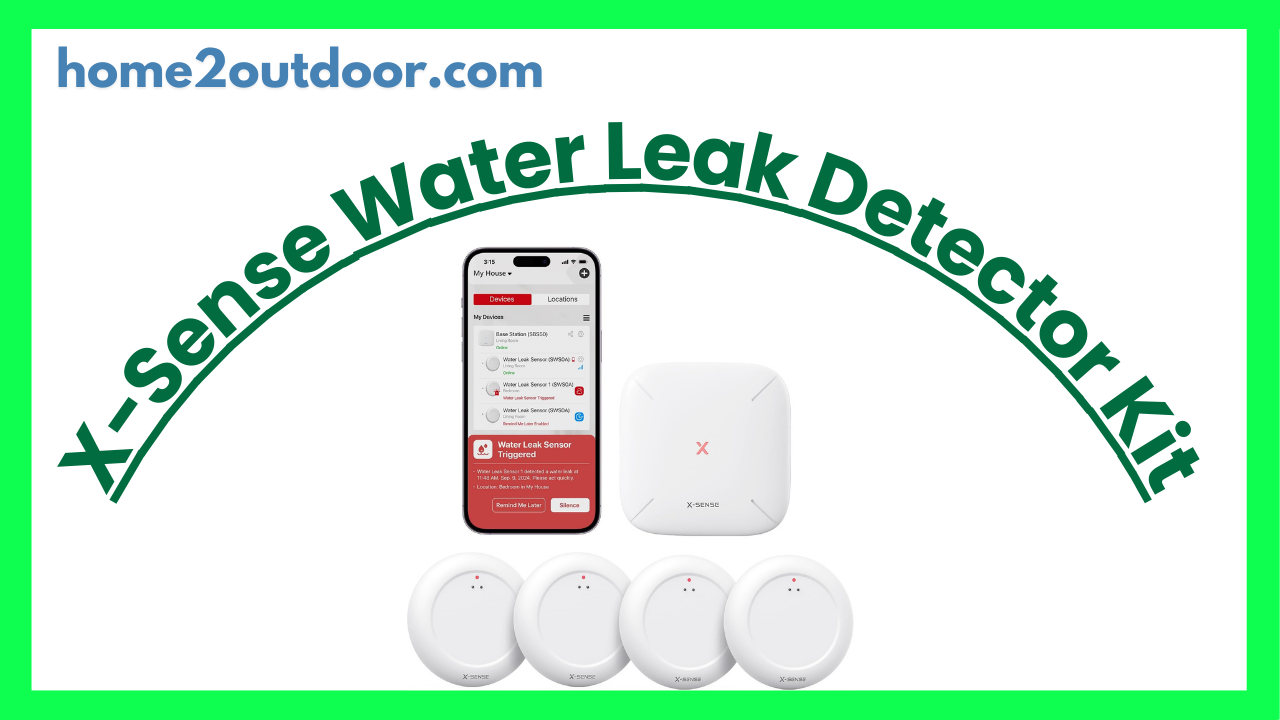
Here’s a breakdown of what I found out about the X‑Sense Wi‑Fi Water Leak Detector (models like SWS0A / SWS51 / SWS54 with the SBS50 base station), its strengths, limitations, and things to check if you’re thinking of getting one. If you tell me your use environment (Dhaka, for example), I can point out what to watch for locally.
What It Is / How It Works
The X‑Sense Wi‑Fi Water Leak Detector system is a smart sensor + hub setup intended to detect water leaks early (even drips), issue loud local alarms, plus send remote notifications (via an app) so you can act quickly. Key parts:
- A sensor unit (water leak detector) which has probes that detect water at its base (bottom sensors) and also on top/exposed parts in some models.
- A base station (hub) called SBS50, which relays alerts, sounds an alarm, and connects the sensors to your WiFi so you get notifications on your phone.
It’s designed for use in places like under sinks, around washing machines, behind water heaters, basements, etc. The idea is to catch leaks/floods early before big damage.
Key Features & Specs
Here are the main technical specs and important features, drawn from X‑Sense documentation/manuals.
| Feature | Detail |
|---|---|
| Models | SWS0A, SWS51, SWS54 etc. These are water leak sensors; the SWS54 kit includes the SBS50 base station + sensors. |
| Detection probes | 2 probes on the top + 4 at the bottom of the sensor in many models, so they detect not only pooling water under them but also drips or moisture from above. |
| Sensitivity | Can detect very shallow water: as low as about 0.4 mm (~0.015 inches) of water. |
| Alarm loudness | The base station speaker gives ~100 dB; the sensors themselves alarm at ~110 dB depending on model. |
| Waterproof / weather protection | Many are IP66 (sensor body is protected vs heavy splashes, humid environment) or IP67 in some slimmer models. |
| Power / battery | The sensors are battery‑powered (2 × AAA); battery life ~3 years, replaceable. The unit “life” is up to 5 years with battery changes. |
| Range | Wireless connection range from sensor to base station in open air ~500 m (≈ 1,640‑1,700 ft) in many models. The WiFi connection of base station is standard 2.4 GHz. |
| App / Notifications | Via “X‑Sense Home Security” app; features include real‑time alerts, low battery notifications, ability to test, mute alarms, possibly “snooze” or “remind me later” options (muting alarms for some time) etc. |
| Operating conditions | Temperature range ~32‑122°F (0‑50°C), humidity ≤ 90% RH (non‑condensing). Sensor should be kept in places that obey that. |
What’s Good / Strengths
Here are things users and the specs suggest are strong points:
- Early detection: With top + bottom probes and high sensitivity (~0.4 mm water), you can detect small leaks or drips early.
- Loud alarms + remote alerts: Because it has both audible local alerts (sensor & base) and smartphone push notifications, you get dual warning. Good for catching things even when you aren’t home.
- Wide range: The large open‑air range means you can place sensors at remote spots (basements, far end of house) and still be connected to the base station.
- Durability in humid or wet environments: Good waterproofing (IP66 / IP67 in many models) and rust‑proof probes make it suitable for wet or damp places.
- Flexibility / scaling: You can add multiple sensors; base station supports many. Volume and alerts can be muted or adjusted; sharing among family members.
- Good battery life: With AAA batteries and lasting 3 years, minimal maintenance for many users. Plus sensor lifetime ~5 years.
- Slim design in newer models: The SWS0A is described as ultra‑thin, enabling placement in tight/corner spaces.
Limitations / What to Be Careful About
No product is perfect; here are trade‑offs or pitfalls based on specs and user feedback:
- Need for base station / hub: The sensor alone doesn’t connect to WiFi; it needs the SBS50 base station. This means an extra device to power, maintain, and ensure is always online. If the hub loses power or internet, remote alerts may fail.
- Dependency on 2.4 GHz WiFi: Doesn’t support 5 GHz. If your WiFi network is only 5 GHz or poorly configured, setup might be problematic. Also, if the WiFi signal to the base station is weak, alerts can be delayed.
- Real‑world range is less than open‑air spec: The “500 m / 1,640 ft” spec is in open air. Walls, floors, interference may significantly reduce range. So placement matters.
- Alarm loudness might be too much in quiet spaces / night: 100 dB is loud; might be offensive in very quiet settings or wake people strongly. Muting or “snooze” features help, but response still must be quick.
- Battery replacement: Though 3 years of battery is good, batteries do eventually fail. If placed in hard‑to‑reach spots, replacing batteries every few years could be somewhat inconvenient.
- Environmental limits: Temperature/humidity extremes outside spec, or condensation, dust, etc. could degrade sensor function or lead to false alarms.
- Cost: Because of the base station + multiple sensors + good build, cost tends to be higher than simple water alarm sensors. If you only need protection in one small spot, might be overkill.
Suitability / Where It Works Best
The X‑Sense Wi-Fi water leak detector system is especially well suited if:
- You have multiple potential leak points (washing machine, under sink, water heater etc.) and want coverage in more than one spot.
- You want remote monitoring (for example you travel, manage property, etc.).
- You live in a place with fairly stable WiFi and electricity so base station/hub will always be up.
- You have damp or humid environments and want a product built to resist moisture/ rust.
- You want early detection of leaks or floods, not just when water has already pooled a lot.
Things to Check / Best Practices If Using It
If you decide to use this device, here are good practices and things to verify:
- Place the sensor in places where even small leaks will reach the probes; don’t elevate it unnecessarily, ensure probes are in contact with areas water may accumulate.
- Ensure the base station is placed centrally enough to have strong wireless signal with sensors; avoid too many walls or metal barriers.
- Keep WiFi stable; possibly ensure backup power for the base station if power cuts are frequent.
- Enable low battery warnings and test them to make sure they work; replace batteries every few years.
- Use the “remind me later” or mute function sparingly — you don’t want to accidentally ignore a real alarm.
- Clean the probes periodically to ensure no corrosion or dirt that could prevent water contacting sensor.
- Check the IP rating (IP66 / IP67) and ensure device is suitable for the moisture/humidity in its intended spot.
- Make sure the app works in your region; some features/firmware might be region‑locked.
Verdict / Summary
Overall, the X‑Sense Wi‑Fi Water Leak Detector system is a very good option for serious home protection against water damage. It combines good sensor design (top + bottom probes, good sensitivity), decent waterproofing, strong alarms, and useful smart‑features (remote alerts, sharing, etc.).
If you are in Dhaka, possible caveats to think about include: how stable your electricity is (for the base station), whether 2.4 GHz WiFi is reliable, how easy it is to replace batteries (cost & availability), and what the cost/import/duties are. But from technical side, it is strong, especially in environments with frequent leaks or water risk.


