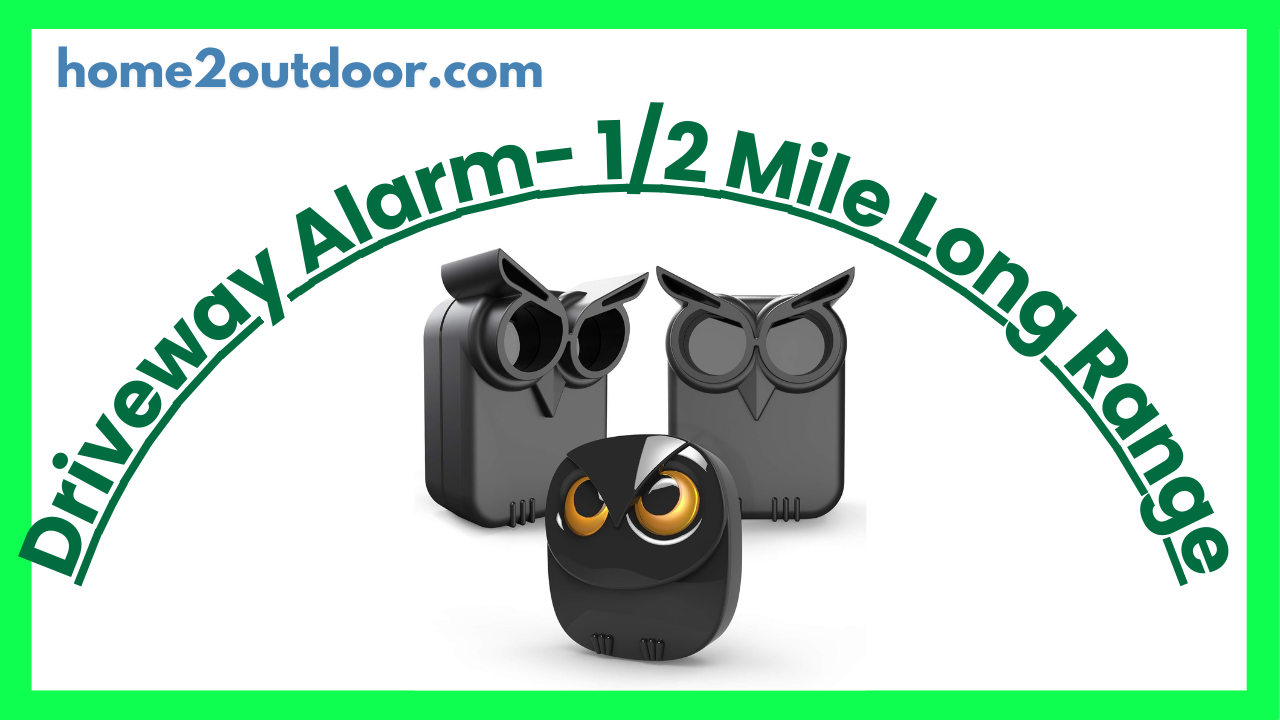
Here’s a breakdown of what I found about ½‑Mile Long‑Range Wireless Driveway Alarms (e.g. “Driveway Alarm ‑ ½ Mile Long‑Range Wireless Driveway Alarm”) — how they work, typical specs, pros/cons, and what to watch out for, especially if you’re thinking of using one in a place like Dhaka.
What It Is
A ½-mile long range wireless driveway alarm is a motion detection system for long driveways or large outdoor areas. It typically consists of:
- One or more motion sensors (outdoor PIR sensors) placed where you want to detect motion (driveway entrance, gate, path).
- A receiver or base station (indoors, or somewhere you can hear/see it) that gets the radio signal from the sensor.
- Sometimes solar power, battery backup, optional multiple sensors / multiple receivers.
The idea is: when something moves (person, car, animal) in front of the sensor, the sensor sends a radio signal to the receiver, which then gives an audible + visual alert so you know someone or something is approaching.
Typical Specifications & Features
Here are the common specs found in many of these “½‑mile driveway alarms,” based on product listings:
| Spec | Typical Values / Range |
|---|---|
| Transmission (Wireless) Range | Up to ½ mile (≈ 800 meters) in ideal / open line‑of‑sight conditions. In practice, obstacles like walls, trees, hills reduce this significantly. |
| Detection (Sensor) Range | Varies: ~25‑70 feet (≈ 8‑21 meters) depending on sensitivity setting. Some sensors have multiple sensitivity levels (Low / Medium / High) to adjust detection distance. |
| Power Source | Sensor: battery powered (often AA batteries), solar recharging in some models. Receiver: plug‑in AC, sometimes with battery backup. |
| Weather Resistance | Outdoor sensors are weatherproof or water‑resistant (IP ratings vary). Able to work through seasons (rain, sun, cold). |
| Wireless / Radio Tech | Some use adjusted radio protocols to avoid interference (e.g. FSK + FHSS) to make wireless signal more stable. Radio frequency often ~433 MHz or similar. |
| Alerts / Receiver Features | Audible alarm or chime, visual light; multiple melody/tone options; adjustable volume; sometimes LED indicator; multiple sensors can be differentiated with different tones. |
| Expandability | Many systems allow adding additional sensors (often up to 4 sensors per receiver, sometimes more) or multiple receivers. |
| Operating Conditions | Varies, but many claims include wide temperature ranges (e.g. ‑30°F to 150°F or equivalent) and functioning across seasons. |
Strengths / Advantages
These driveway alarm systems have several advantages:
- Long coverage so you can detect movement far away from your home / building. Good for long driveways, large properties.
- Ease of installation: Wireless, no heavy wiring; sensor mounted on post, tree, fence, plugging in receiver indoors; many are DIY.
- Expandable: Can add more sensors or receivers to cover larger perimeters.
- Low maintenance (especially solar‑powered or battery powered sensors with decent standby time) if the system is well designed.
- Custom alerts: Different tones / melody for different sensors helps you know where motion is happening.
Limitations / What to Watch Out For
However, there are important trade‑offs and caveats to be aware of:
| Issue | What you may experience / be cautious of |
|---|---|
| “Half‑mile” often means line‑of‑sight / ideal conditions | In real settings (trees, hills, walls, interference), range often drops significantly. Do not assume the full ½‑mile works in your environment. |
| False alarms | Animals, insects, moving foliage, passing vehicles, shadows, etc. may trigger the sensor. Sensitivity and placement matter. Some models have sensitivity adjustments.
| Power & battery issues | Battery‑powered sensors require good batteries; solar‑powered sensors need sufficient sunlight. If power is unreliable, the receiver may lose electricity or the sensor battery may die
| Weather durability | Even weather‑resistant sensors degrade over time (moisture ingress, UV damage etc.). The seals, plastic, mounting points, and sensor window must be robust. |
| Delay or missed detection | If sensor is placed poorly (wrong angle, height, obstructed), detection may be delayed or missed. Rain/fog/snow may reduce detection power. |
| Volume and notifications | Receiver must be placed somewhere you hear it; in a noisy household, or if the receiver is far inside a building, you may miss alerts. Some receivers have battery backup, which helps during power cuts. |
| Cost | Higher‑range systems with good reliability cost more; solar panels, weather‑proofing, stronger radio transmitter, etc., add to cost. |
Tips for Good Use / Installation
If you plan to use one, here are suggestions to get the best performance:
- Mount the motion sensor in a clear line of sight (without many obstacles) toward the area you expect motion to come from.
- Set sensor height & tilt such that detection is optimal: high enough to avoid small animals but not so high that humans / cars pass below the detection zone.
- Use the sensitivity settings: start low, test, increase if needed.
- Use good quality batteries; if solar panels are included, ensure good exposure to sunlight.
- Test communication distance between sensor and receiver before final installation to ensure the signal comes through at the places you need it.
- Plan for weather: ensure the housing is tight, sealed, the sensor window clean; avoid mounting under drip areas that funnel water.
- Pick a receiver location where you can readily hear alerts; perhaps more than one receiver if needed.
Is It Good / Worth It Locally (e.g. in Dhaka)?
For a city like Dhaka or similar:
- The “½‑mile” range may be ambitious due to buildings, foliage, walls, and obstructed lines of sight. You’ll likely get less range in practice.
- Solar‑powered sensors are beneficial if you have long stretches outdoors without electricity, but ensure that charging works with your local sunlight conditions, shade, and weather (monsoon, dust etc.).
- Check the frequency / radio regulations locally — some devices using certain radio frequencies may not be legal or may face interference.
- Weatherproofing will be very important: Dhaka has heavy rainfall, high humidity, heat, etc. Choose models with good IP rating.
- Cost of importing such devices, maintenance, battery replacement etc. should be factored.