
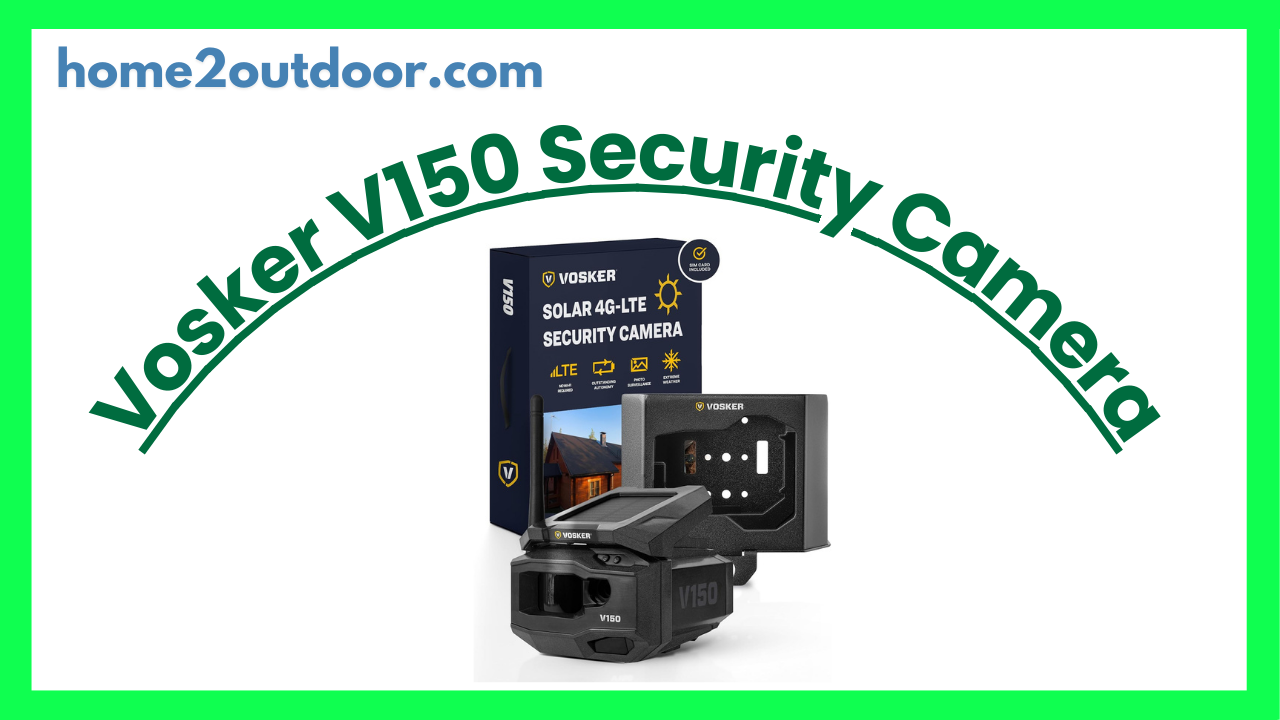
Here’s a detailed rundown of the Vosker V150 Solar‑Powered LTE Cellular Outdoor Security Camera — what it can do, its strengths & trade‑offs, and things to watch out for. Good if you’re considering this kind of camera for remote / off‑grid / no‑WiFi locations.
What It Is
The V150 is a wire‑free outdoor security / surveillance camera designed for places without reliable WiFi or power. It uses LTE (cellular) connectivity to send still photos (not full live video stream) when motion is detected. It has a built‑in solar panel + rechargeable battery pack so that it can run for long periods outdoors with minimal wiring. Vosker positions it for monitoring remote properties, wildlife, marine settings, farms, cabins etc.
Key Specs & Features
Here are its main specs, drawn from manufacturer & user sources:
| Spec | Value / Details |
|---|---|
| Connectivity | LTE / 4G cellular (SIM card included; independent of WiFi) |
| Power | 10,000 mAh rechargeable lithium battery pack (model V‑LIT‑B2) + built‑in solar panel for recharging in daylight. |
| Photo / Image Capture | Full HD photos (1920×1080) saved locally to microSD card; app images lower resolution (≈ 600×338) |
| Storage | Comes with a 16 GB microSD included; supports up to 32 GB. |
| Motion Detection | PIR sensor with detection range up to ~90 ft (≈ 27 m) under good conditions; configurable detection delays between motion events (instant up to 30 min) |
| Night Vision | Infrared night capture (black & white at night); “colour by day” images |
| Field of View / Lens | ~43.6° horizontal FOV (≈ 42° detection angle) |
| Weather Resistance | IP65 rating (weather‑resistant to rain, dust etc.) |
| Physical Size / Mounting | Rugged body; includes mounting bracket, solar panel, SIM, SD card; must be placed with good sunlight exposure for solar charging. |
| Subscription / Plan | Vosker offers data/photo‑storage plans; apps supports AI image recognition (“Vosker Sense”) to filter alerts (people/vehicles) and reduce false positives. |
What It Does Well / Strengths
Here are the things people seem to like:
- “Set‑up anywhere”: Because of cellular + solar, you can deploy it in truly remote locations without WiFi or power outlets.
- Good battery + solar combo: Users report the solar panel helps maintain a full or near‑full charge over time, especially in sunny seasons.
- Photo quality in daylight: Daytime‑images tend to be clear; night vision is serviceable.
- Weather tolerant design: The IP65 casing and rugged mounting help in outdoor environments.
- Useful for low‑intervention surveillance: Especially where you just need to know when something changed / someone passed by (photo alerts), rather than continuous video streaming. Less data usage vs full video.
Limitations & Common Complaints
There are some trade‑offs / drawbacks reported by users. Depending on how / where you use it, these could matter a lot.
| Weakness / Challenge | What Users Say / What to Expect |
|---|---|
| Only still‑photo alerts, no live video | It does not stream full HD video live; alerts are based on still photos. If you need video or continuous monitoring, this may be insufficient. |
| Dependence on good cellular signal | If LTE signal is weak, alerts may be delayed or fail; angle of antenna matters. Solar charging won’t help if connectivity problems. |
| Solar panel charge limitations (shade/cloud) | In shade or overcast conditions, solar panel may not supply enough to keep battery up, especially if there are many motion triggers or night captures. Battery may drain. |
| Cost (initial + ongoing subscription / data plan) | Besides hardware cost, you’ll need a Vosker photo/data plan; some users find the recurring fee high relative to what you get. |
| Build / reliability issues in some units | Some users complain about moisture ingress, fogging, weak latches, degraded photo quality over time. |
| False triggers | PIR motion sensors sometimes get triggered by small animals, moving branches, or changing light/shadows, especially if placed where motion is frequent. Leads to many alerts and battery drain. |
Best Use‑Cases
Given its strengths & weaknesses, the V150 works well in scenarios like:
- Remote / off‑grid locations: cabins, farms, gates, marine docks — places without power or WiFi.
- Monitoring wildlife, trespassers, or checking perimeter (photo snapshots when something moves).
- Situations where you don’t need full video, just “did something happen?” alerts.
- Areas with decent sunlight, so the solar panel can keep up.
It might be less ideal if:
- You need live video / continuous surveillance or HD video streaming.
- It’s placed under heavy shade or poor sunlight exposure.
- Cellular coverage is weak or inconsistent.
- You need something with more robust build / waterproofing than IP65 (i.e. more harsh environments).
Practical Tips If Using the V150
If you go ahead with it (or are evaluating for purchase), here are some tips to get the best out of it:
- Pre‑charge hardware fully before installation. Let the battery pack charge 12‑24 hours.
- Mount with good sun exposure: The solar panel should face the sun for many hours; avoid shade from trees/buildings.
- Check LTE signal strength at the exact location before mounting permanently. If signal is weak, performance will suffer.
- Optimize motion detection settings: Use correct sensitivity, avoid frequent false triggers (e.g. moving vegetation); set detection delay intervals to reduce battery consumption.
- Keep firmware updated: Pull updates via app when available; some bug fixes help reliability.
- Protect the physical components: Ensure the latch for the battery / SIM card is secure; watch for any water ingress after rain; clean lens / solar panel as needed.
- Mind subscription plan: Check how many alerts/photos per month you get, how long storage lasts, and what costs are, so you don’t get surprise charges.
Overall Verdict
The Vosker V150 is a strong option if you need a surveillance camera that works where power and WiFi aren’t available — for example remote lots, rural property, cabins or wildlife. Its solar + LTE combo, rugged weather resistance, and photo‑alert capabilities make it quite useful in those contexts.
However, it is not a perfect “security video camera” for all scenarios — the lack of live video streaming, reliance on still images, the need for real sun, and the ongoing subscription/data plan are trade‑offs one needs to accept.


