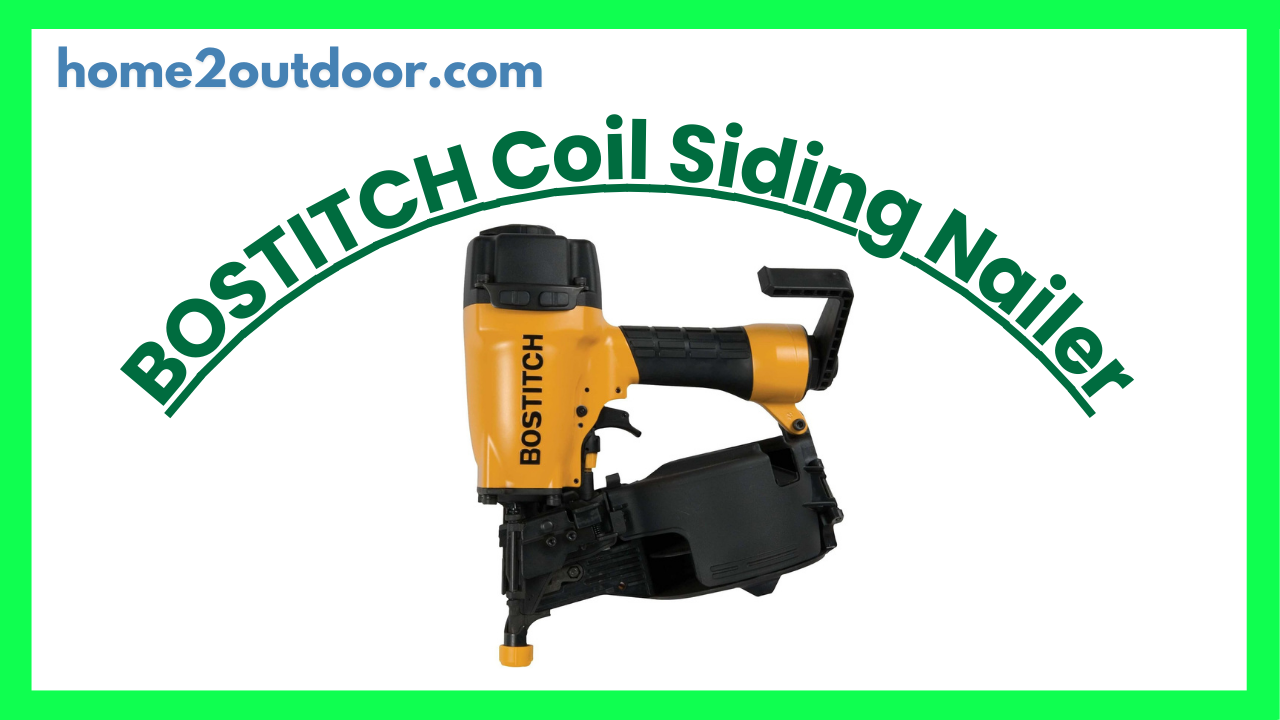
Here’s a detailed guide to the BOSTITCH Coil Siding Nailer (especially models like the N66C‑1 & N75C‑1) — what they are, how they work, pros & cons, and whether they might be a good option depending on your needs.
What It Is
The Bostitch coil siding nailer is a pneumatic (air‑powered) tool designed for high‑volume nailing of siding, sheathing, decking, fence pickets, and similar exterior wood work. It uses coil‑fed nails, typically wire weld or plastic‑collated, in a 15‑degree collation; this lets you carry more nails in the magazine so fewer reloads.
Two of the key models are:
- N66C‑1 — more “standard” coil siding nailer, lighter, for nails 1‑1/4 in to 2‑1/2 in in length.
- N75C‑1 — similar type, but built for somewhat larger nail lengths (1‑1/2 in to 3 in), for heavier siding/sheathing or thicker material.
Key Specifications & Features
Here are typical specs & features for these models, from multiple credible sources:
| Spec | N66C‑1 | N75C‑1 |
|---|---|---|
| Nail Length Range | 1 1/4 in to 2 1/2 in | 1 1/2 in to 3 in |
| Nail Diameter (Shank) | ~ 0.080 in to 0.092 in | ~ 0.090 in to 0.131 in |
| Collation Type & Angle | Wire weld and plastic inserted, 15° coil nails; helps in higher capacity and compactness. | Same (15° coil) |
| Magazine Capacity | ~ 300 nails in many models (300 coil capacity) | ~ 300 (sometimes quoted 225‑300 depending on nail length) |
| Operating Pressure / Air Requirements | 70‑120 PSI | Same range for N75C‑1: 70‑120 PSI |
| Tool Weight | N66C‑1 ≈ 4.7 lbs (~2.13‑2.2 kg) | N75C‑1 ≈ 4.9 lbs |
| Materials & Build | Lightweight aluminum housing; soft rubber foot (to prevent marring soft wood); tool‑free adjustable exhaust; adjustable depth guide for driving nails to desired depth. | Same kinds of build features; durable; aluminum body, etc. |
| Trigger / Firing Mode | Usually sequential trip (sometimes contact trip is an option) | Same style; for control and safety, sequential trigger is preferred by many. |
| Warranty | N66C‑1 has a 7‑year manufacturer warranty. | N75C‑1 similarly has long warranty support in many retailers. |
What Users Like / Advantages
Here are some of the strengths people report about Bostitch coil siding nailers:
- High velocity, high volume: The capacity of 300 nails per coil means less downtime reloading, which helps on large siding or sheathing jobs.
- Depth adjustability: The adjustable depth guide is appreciated — allows consistent flush or slightly countersunk nailing depending on siding material.
- Lightweight and durable: Aluminum body reduces fatigue; soft rubber “foot” helps avoid damaging siding surfaces.
- Versatility in nails: Ability to use plastic‑collated or wire weld coils is helpful for different nail availability or preference.
- Good driving power: For the specified shank and nail lengths, they tend to drive well even into tougher woods or materials.
Limitations / What to Watch Out For
While solid tools, there are trade‑offs / things to consider, especially if you’re buying one:
- Air supply needed: You’ll need a compressor that can reliably supply the required pressure and airflow. Coil nailers use more air per shot, so compressor capacity matters.
- Maintenance & jams: Coil feed mechanisms can jam, especially if nails are bent, collated poorly, or if dirt/debris enters. Keeping the nail gun clean and using quality nails helps.
- Weight/bulk overhead: Even though ~4.7‑4.9 lbs is relatively light, for overhead siding (especially on tall walls or ladders), fatigue still builds up.
- Costs of nails: Coil siding nails (especially plastic inserted or galvanized) tend to cost more than simpler nail types; shipping bulbs/coils may increase local cost depending on your location.
- Exhaust direction / safety: These tools blow compressed air and nail debris; adjustable exhaust helps but working safety gear (glasses, maybe ear protection) is needed.
Who It’s Best For
This type of tool is ideally suited for:
- Contractors or serious DIYers doing exterior siding, sheathing, decking or fencing, especially in large volumes.
- Jobs where speed matters (many nail placements) — coil feed helps reduce interruption.
- Using materials that require flush or controlled depth, or when appearance counts (so you want consistent nail head setting).
Less ideal when:
- You only have occasional siding / lightweight job; a smaller, simpler nailer or staples might be more cost‑effective.
- Compressor or air supply is weak or inconsistent.
- Material is extremely hard or thick beyond what the nailer is rated for — might cause misdriving or need more air power.
Example Comparison: N66C‑1 vs N75C‑1
- N66C‑1 is great when your siding work is “standard” — nail lengths up to 2‑1/2 in, typical shank diameter. Slightly lighter, a bit more nimble, good for many home siding/fencing jobs.
- N75C‑1 gives more range (longer nails up to 3 in), which helps with thicker sheathing, multi‑layer siding, or when you need deeper holding in certain substrates. But it may be slightly heavier or need more air/adjustment.
Bottom Line
The BOSTITCH Coil Siding Nailer (especially models like N66C‑1 and N75C‑1) is a very good choice if you want durability, speed, and reliability for siding / sheathing type jobs. It has the features you expect: coil feed, adjustable depth, good ergonomic touches, and solid warranty.