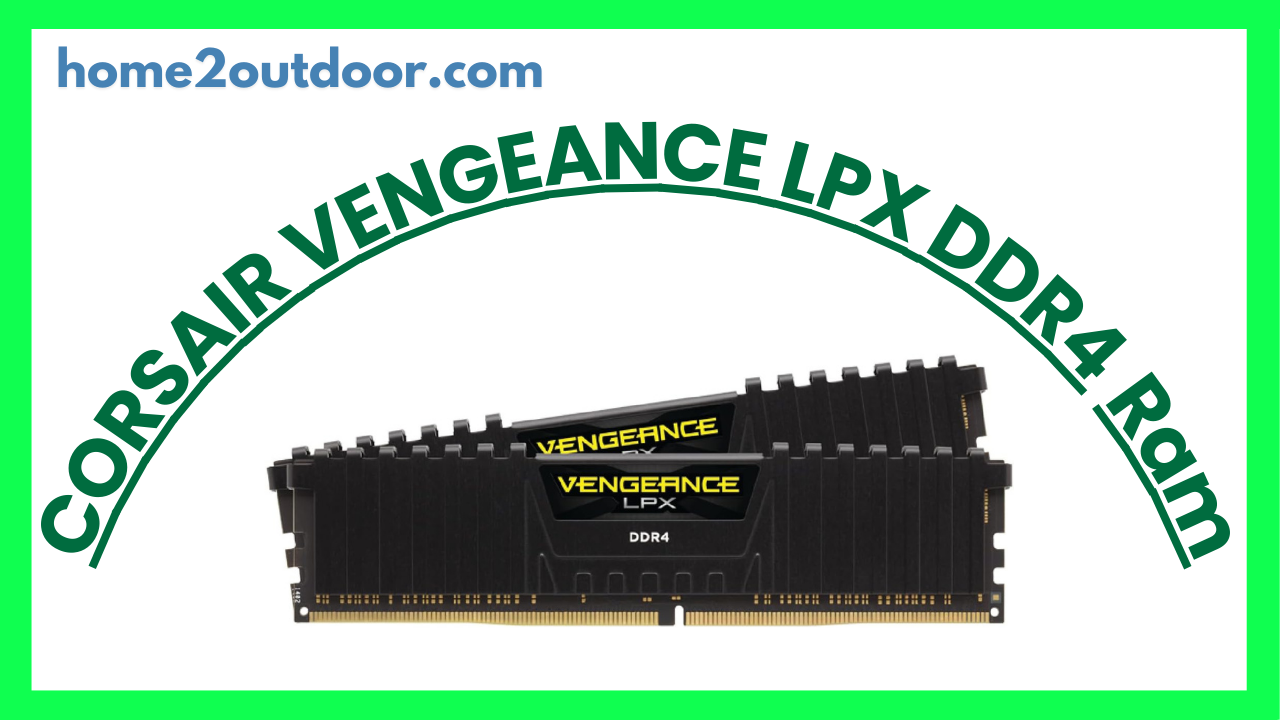
Here’s a review of the Corsair Vengeance LPX 32 GB DDR4 RAM — what makes it good, what its limitations are, and when it’s a strong choice or maybe not.
What It Is / Key Specs
“Vengeance LPX” is Corsair’s no‑frills performance DDR4 line. The 32 GB kits typically come as 2×16 GB modules (or sometimes 4×8 GB), with speeds commonly in the 3200 MHz to 3600 MHz range, CAS latencies around CL16‑18, running at about 1.35V for many of the higher‑speed versions.
It uses a low‑profile aluminum heat spreader (“LPX” = Low Profile X), which helps with heat dissipation but also helps in compatibility with large CPU coolers or tighter spaces.
Also features include Corsair’s XMP 2.0 support, meaning you can generally enable a BIOS/UEFI profile to hit its advertised speed/timings without manually tuning.
Strengths (What It Does Well)
- Good Capacity + Performance for Many Use Cases
32 GB is more than enough for most gaming, multitasking, content creation, streaming tasks etc. If you’re doing heavy editing, virtualization, or big data work, it gives enough headroom. Combined with a decent MHz & latency, performance is solid. - Low‑Profile / Thermal Design
The heat spreader is low‑profile which helps avoid clearance problems with large air coolers, and the aluminum spreader helps to dissipate heat, which helps stability when running at XMP or when the system is under load. - Wide Compatibility
It works well with both Intel and AMD DDR4 platforms. Because speeds like 3200‑3600 MHz are well supported across modern motherboards and CPUs, it’s easier to get the full benefit. Also the XMP support helps. - Value / Reliability
Corsair has good reputation, and the LPX line tends to offer fairly dependable performance for the price. For those wanting good RAM without paying for RGB, exotic heatsinks, or ultra‑tight latencies, this strikes a balance. The lifetime limited warranty helps too.
Weaknesses / Trade‑Offs
- Latency & Speed Limitations
While 3200‑3600 MHz is good, it’s not top of the line. Some high‑end kits get faster speeds or lower CAS latencies (e.g. CL14 or tighter) which can matter in specific workloads (competitive gaming, memory‑sensitive tasks). If you push further, you may find diminishing returns unless your CPU / motherboard can take advantage. - Overclock Headroom Is Moderate
Many users report little room for improvement beyond the XMP settings; pushing higher often requires loosening timings or increasing voltage, which may not always be worth it. - No Fancy Extras
No RGB, no ultra‑premium aesthetic features. If you want lighting / showy looks, LPX is plain (which is good for many, but a downside for those focused on visual flair). - Price vs Alternative High‑End RAM
When you compare to top‑tier RAM (RGB or non‑RGB) with tighter timings or higher speeds, the LPX may lag a bit. If your budget can stretch, you may get marginal performance improvements elsewhere. But whether those improvements are meaningful depends heavily on your usage.
Who It’s Best Suited For
This RAM is a strong fit for people who:
- Build a gaming / streaming / content creation PC and need good memory without spending excessively.
- Have moderate to high usage demands: multitasking, large software, possibly editing multimedia or light virtualization.
- Need RAM that fits under large CPU coolers or in smaller form‑factor builds where RAM height / clearance is a concern.
- Don’t care much about fancy RGB lighting or ultra‑premium heat spreaders; they’d rather have clean function.
Less ideal if you:
- Are chasing every single FPS in competitive games, and want the fastest possible RAM (lowest latency / highest speed).
- Need very tight timings or want to overclock heavily beyond what many LPX kits offer.
- Want RAM that is also a visual centerpiece (RGB, stylized design etc).
Verdict
Overall, the Corsair Vengeance LPX 32 GB DDR4 is an excellent “sweet‑spot” RAM kit. It balances capacity, speed, reliability, and price very well. It’s not the absolute fastest or flashiest, but for most users it offers exactly what they need with minimal fuss.
If I were getting RAM today for a build, I’d pick this if I wanted to ensure stable performance under load with plenty of headroom and I wasn’t worried about RGB or super low latency. It gives more “bang for buck” than a lot of premium kits when considering real‑world use.