
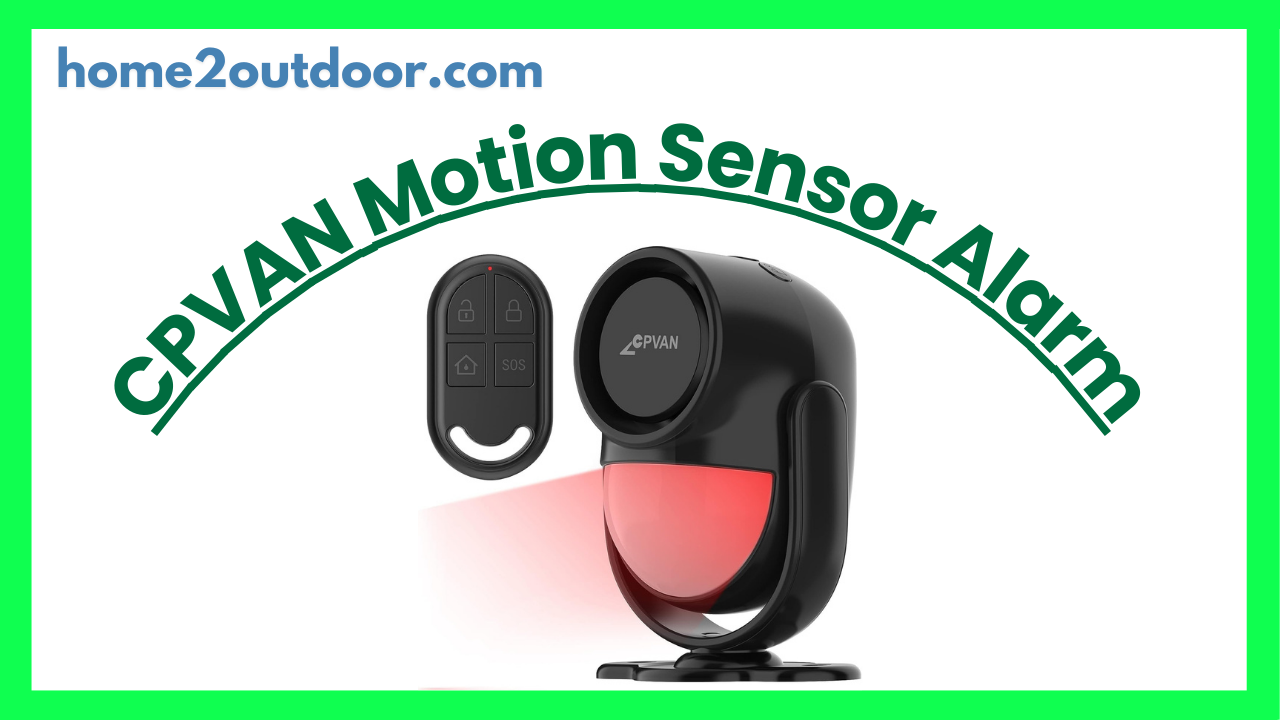
Here’s what I found out about the CPVAN 125 dB Loud Motion Sensor Alarm (CP2 / CP2 Pro etc.) — its features, what it does well, some limitations, and things to check if you want one. If you want, I can also see how well it works in Dhaka (availability / suitability).
What It Is
This device is a PIR (Passive Infrared) motion‑sensor alarm with a built in siren. It detects motion and emits a loud alarm (or chime) to warn you or deter intruders. It includes a remote control (key fob) so you can arm/disarm it from a distance. It’s meant for indoor use (garages, sheds, shop fronts, vans, etc.).
Key Features & Specifications
Here are the main specs / capabilities as advertised:
| Feature | Details |
|---|---|
| Sound Level / Siren Loudness | 125 dB siren (very loud). |
| Detection Range | Up to ~40 ft (~12 m) under ideal conditions; more reliably ~10‑26 ft (≈ 3‑8 m) for many installations. |
| Detection Angle | Around 110° field of view (horizontal) for the PIR motion sensor. |
| Remote Control Range | Remote (433MHz) works up to ~328 ft (~100 m) open space for arming/disarming / triggering the unit. |
| Power Source | Usually powered by 3 × AA batteries (included). Some models allow power via a 5V/1A adapter (USB) as an option. |
| Modes | Two main modes: alarm mode (siren on motion) and chime mode (a gentler sound, e.g. notifying rather than full alarm). |
| Low Battery Alert | Emits a ticking or periodic warning when battery is low. |
| Installation | Mount using screws or adhesive; can be wall‑mounted or placed on flat surfaces. Simple DIY installation. |
| Other | Sensitivity designed to distinguish human motion vs small interference; dual‑core “fuzzy logic” in some specs for false alarm reduction. Humidity tolerance of under ~80% in many listings. Not waterproof. |
What It Does Well / Strengths
These are the strong points of the CPVAN 125 dB alarm:
- Very loud: 125 dB is extremely loud; it will alert people nearby and loudly deter intruders. Good for sheds, garages, entryways, etc.
- Remote control convenience: You can arm/disarm / trigger via remote; very useful so you don’t have to physically reach the unit.
- Good detection range & angle: For its price and type, performs well in detecting motion at useful distance and angle.
- Battery‑powered / optional USB: Flexibility in power means you can place it where plug sockets may be hard to access.
- Chime + alarm modes: Useful so you can set it to a less disruptive mode when full siren is not needed (e.g. during the day).
- Easy installation: No wiring, simple mount; ready to go out of the box (batteries included).
Limitations / Things to Watch Out For
Here are caveats / drawbacks reported by users or evident from specs:
- Not waterproof: Designed for indoor use. Rain, high humidity or exposure to weather could damage it.
- Battery life: With frequent triggers or siren mode, batteries drain; user reports suggest needing battery replacements somewhat often (depending on usage). Also low battery alerts can be annoying.
- False triggers: PIR sensors can be triggered by pets, heat sources, moving curtains, etc. The “fuzzy logic” / filtering helps but doesn’t eliminate false alarms.
- No WiFi / smart‑app control: It uses radio remote control; no internet app or phone integration (in most versions). Limits to local control only.
- Alarm cutoff / reset behavior: Some versions alarm for a fixed period then stop; others need manual reset via remote or unit. If you forget, the siren might stay on or activated more often than you want.
- Visibility & placement critical: Line of sight matters; PIR sensors don’t detect through walls or glass; placing it badly reduces effectiveness.
Use Cases / Where It’s Good
This kind of alarm is especially useful for:
- Securing small structures: garages, sheds, vans, tool rooms, etc.
- Areas where you want a loud deterrent rather than discreet monitoring.
- Properties where wiring is difficult or you want something easily movable.
- Situations where remote control is useful (arming/disarming without physically opening doors or being right next to the alarm).
What to Check / Best Practices
If you get it or are considering buying, here are tips to ensure good performance:
- Mount it high & angled: Place where the PIR sensor has good view of the area (entrance, walkway), avoid pointing at direct sunlight or heat sources.
- Ensure you have access to change batteries: Because battery life may be limited (especially with many triggers), pick a location that’s easy to reach.
- Set it to chime mode when needed: During times when siren mode is too loud (night, close quarters), use the gentler mode.
- Test remote control range: Walls / distance reduce the remote’s effectiveness. Try it from the farthest point you need.
- Manage false alarms: If pets or small animals trigger it, adjust placement or sensitivity if possible; keep curtains, moving objects out of detection zone.
- Check warranty / support: CPVAN seems to offer 12‑18 months etc. Make sure you get a reliable seller.
- Don’t expect professional monitoring: This kind of device is more of a deterrent / alert piece, not a full security system with alarm center or emergency services integration.
Summary
The CPVAN 125 dB Loud Motion Sensor Alarm is a strong option if you need a loud, fairly affordable, and simple solution to detect movement and be alerted locally. It’s not fancy (no WiFi, limited “smart” features), but for many scenarios it offers big benefit: a loud siren, remote convenience, flexible mounting, and deterrence. If placed well and used smartly, it can significantly improve security for small‐scale installations.


