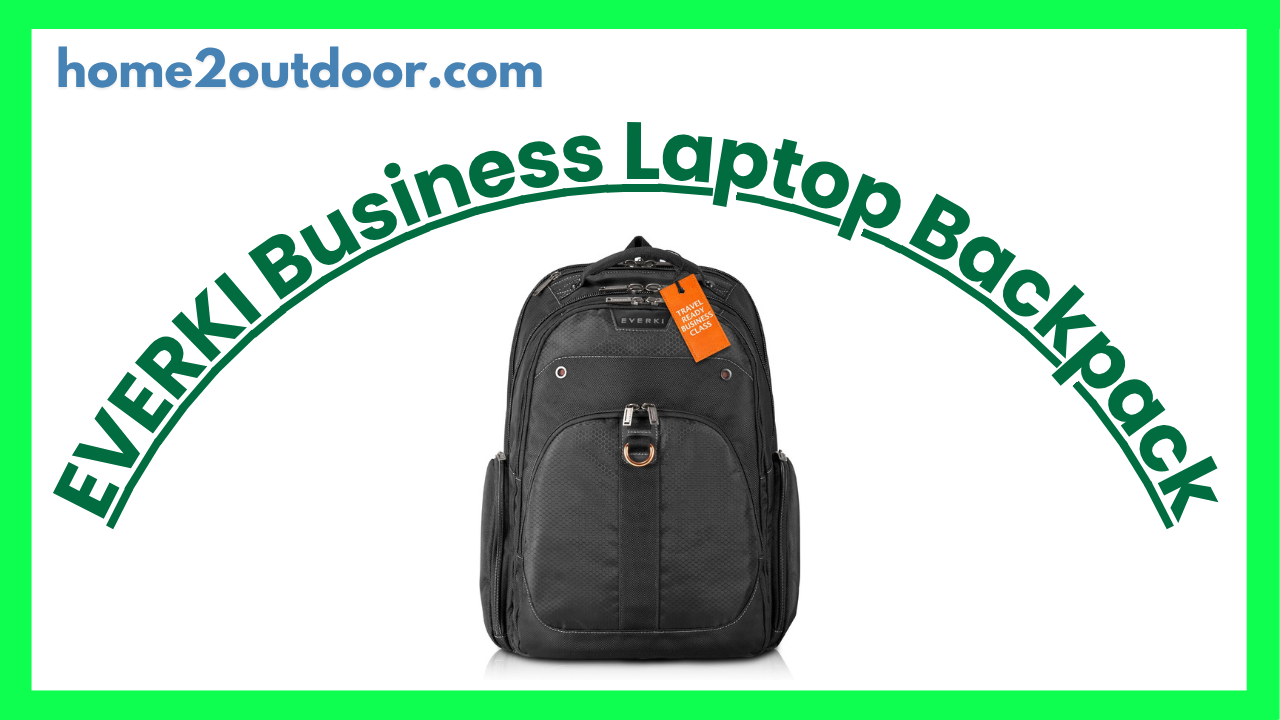
Here’s a detailed review of the EVERKI Atlas 32L Business Laptop Backpack (EKP121 / “Atlas” series) — what it gets right, where it doesn’t quite reach, and for whom it might be a good or less-good choice. If you tell me what your priorities are (weight, waterproofing, durability, price, etc.), I can help assess how it stacks up for you.
What It Is / Key Specs
From official info, hands-on reviews, and user feedback, here are the main details:
| Spec | Detail |
|---|---|
| Capacity | ~ 32 L (for travel / business / daily work carry) |
| Device Compatibility | Fits laptops from ~13-inch up to 17.3-inch, plus a tablet / iPad in a felt-lined pocket. The laptop compartment is adjustable (via Velcro panels) to accommodate different thicknesses / laptop sizes. |
| Internal Organization | Many compartments: tech (laptop + tablet), front organizer pockets (pen / small items), a quick-access top pocket for things like phone or glasses, side pockets for water bottle / small gear, etc. Also a “checkpoint-friendly” design meaning it can open / lay flat for airport security checks. |
| Comfort / Carry System | Padded shoulder straps, a chest / sternum strap, lumbar padding / mesh back panel, strap management system (clips or slides so loose straps don’t hang or flap), trolley pass-through to mount the backpack on rolling luggage. |
| Build & Materials | Durable materials, strong zippers with large metal pulls, high contrast (orange) lining inside so you can more easily see what’s inside in low light. Limited lifetime / warranty coverage for defects. |
| Size & Weight | Dimensions are around 46 × 34 × 23 cm (≈ 18.1 × 13.4 × 9.1 in). Empty weight in various sources ~ 1.66-1.82 kg (≈ 3.7-4.0 lbs) depending on variant. |
What It Does Well
Here are aspects that users (and reviewers) praise:
- Excellent Organization
Nearly everyone who uses the Atlas says: lots of pockets, good layout, thoughtful placement of compartments. You can carry laptop + tablet + chargers + cords + documents + smaller accessories without everything being a jumble. - Device Protection & Flexibility
The adjustable laptop compartment is useful. If you switch between devices (say a thinner ultrabook vs a thicker 17-inch laptop) the ability to snug the laptop with Velcro panels helps protect the gadget and reduce shifting. Felt lining helps reduce scratches. - Travel / Business Convenience
The “checkpoint-friendly” design (opening or accessing devices easily during airport security) and trolley sleeve (so you can slot it onto the handles of a rolling suitcase) are very useful features for business / frequent flyers. - Durability and Warranty
Many users comment that after years of use the Atlas still holds up well: straps, stitching, zippers still in good condition. Also, customer service / warranty seems to be a strong point. - High Contrast Lining = Practical Not Just Aesthetic
The bright orange interior helps with finding things inside the pack, especially smaller items or in dim light. This is a little detail but one that comes up repeatedly in feedback as being genuinely helpful.
Where It Falls Short / Trade-Offs
No product is perfect; here are the limitations, based on user experience and reviews:
- Weight + Bulk When Empty
The pack is relatively heavy for a laptop backpack when empty (~1.7-1.8 kg). That’s not bad if you fill it well and use it for travel/work daily, but if your priority is lightweight carry, this might feel heavy. - Comfort Under Heavier Loads or Long Treks
Many users say that while the padding is good, once you fill the Atlas with laptop, chargers, documents, maybe a change of clothes etc., and carry it for long walks or over long durations, the load begins to press on shoulders/back. Especially since there’s no rigid external frame; the comfort depends a lot on how well you distribute the weight. - Limited Weatherproofing
It has water-repellent coating etc., but it isn’t fully waterproof. Zippers / seams can be weak points in heavy or prolonged rain. If you’re in a climate with heavy rain, you may want a rain-cover or more waterproof alternative. - Size Might Be More Than Needed for Everyday Minimalists
If your usual carry is just laptop + minimal charger + wallet + phone, this backpack’s capacity and bulk may be overkill. It takes space, and in tight, crowded situations (public transit, buses, motorcycles, etc.), a slimmer alternative might be easier. - External Bottle Pocket Limitations
The water bottle / side pocket(s) are okay, but for tall / wide bottles, or bulky drink containers, they may be a tight or insecure fit. Under full load, the shape of the pack may become a bit “stiff” or square, making side access less stretchy.
Who It’s Best Suited For
Putting it all together, the Atlas fits best for people who:
- Travel fairly often (business trips, commuting through airports), and need to carry laptop(s), tablet, chargers, cables, documents.
- Want good quality, strong materials, and will benefit from the organizational features.
- Don’t mind carrying a somewhat heavier backpack in exchange for protection and space.
- Prefer a pack that looks professional / business-friendly rather than rugged outdoorsy.
- Need flexibility in device size (maybe occasionally change between a thick gaming / workstation laptop and a lighter ultrabook) — the adjustable laptop sleeve is helpful.
It is less well suited if:
- Your primary concern is keeping the empty weight minimal.
- You often walk long distances with a heavy load or carry it on motorcycles or bikes where shape / weight matters.
- You need fully waterproof external protection.
- You want a minimalist bag for very light carry — it may be more than you need.
Overall Verdict
- Score Estimate: If I were to score it out of 5, I’d give it around 4.0 to 4.5 (depending on how heavy your typical carry is).
- Value: It’s relatively premium-priced, but many users feel the cost is justified by the materials, build quality, organizational layout, and the warranty.
- Long Term: The durability / warranty / quality of materials suggests it is likely to last several years of regular use, especially if treated decently (not abused in harsh terrain or heavy rain without cover).