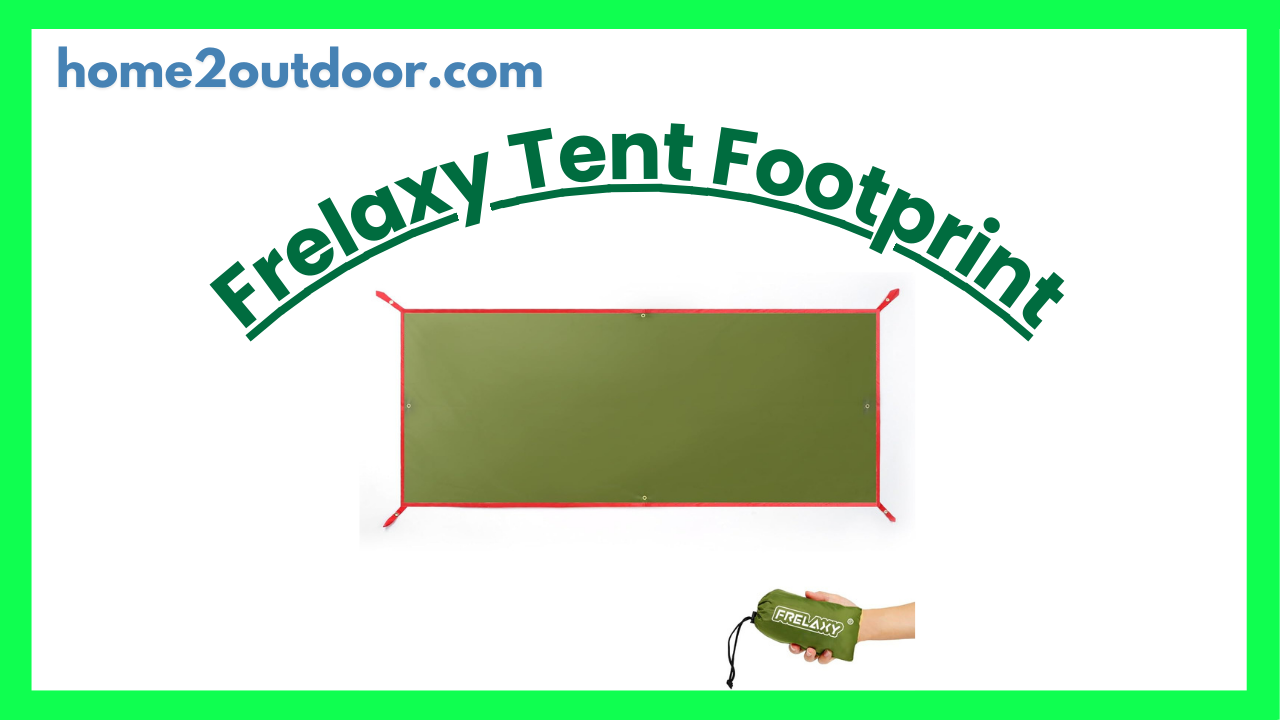
Here’s a review of the Frelaxy Tent Footprint (a groundsheet/tarp to go under your tent) — what it offers, where it shines, and where to be cautious. If you tell me which size you use (for how many people), I can tailor the advice.
What It Is & Key Specs
From product descriptions and seller listings, here’s what Frelaxy claims / what users report:
Materials & Waterproofing
- Made of 210D / 190T ripstop polyester with a PU coating.
- Waterproof rating: PU3000 mm (i.e. capable of resisting water pressures up to that height) in many listings.
- Construction includes reinforced stitching, grommets (at corners, and middle/side ones) and straps/loops for anchoring.
Sizes & Weight
- Offered in multiple sizes to match different tent footprints (e.g. 33″×80″, 56″×80″, 80″×80″, 104″×80″, 116.5″×104″) depending on model/variant.
- Example: the 80″×80″ version is listed as ~ 0.7 lb (~ 11.2 oz)
- The 104″×80″ variant is ~ 0.9 lb in one listing.
Versatility
- Marketed not just as a footprint, but also usable as a ground tarp, picnic mat, sun/rain fly, or general-purpose ground cover.
- Includes a storage bag for compact packing.
User Ratings / Feedback
- On Amazon, some size variants get ~4.4 / 5 stars over hundreds of ratings.
- Reviewers often praise build quality, waterproof performance, compactness, and value for money.
- Some note potential mismatch in advertised vs. actual weight (some units heavier than claimed) or slight dimension or fit issues in particular tent setups.
Strengths / What Works Well
- Good waterproofing for many conditions
PU3000 mm is a solid rating for ground moisture, dew, and moderate rain. Reviewers mention that in practice the tarp “did not let any water thru” and kept the ground under their tent dry. - Decent material & construction
Ripstop polyester, reinforced stitching, and multiple anchoring points give it strength and durability compared to generic tarps. The presence of grommets and loops helps with securing it well under the tent or as a freestanding tarp. - Versatility
You can use it beyond just under a tent: as a patio sheet, picnic mat, tarp cover, or shade/rain fly in a pinch. That adds value for multi‑purpose use. - Compact and light for what it offers
Among ground covers with waterproofing and reinforcements, it’s relatively lightweight. It folds down into a manageable pack size (with storage bag) which is useful for hiking or travel. - Value for price
Many users feel the cost is reasonable for what you get—protection, durability, and utility beyond just a simple tarp.
Weaknesses / Limitations & Caveats
- Thickness / feel might be thin
Some users describe the tarp as “thin” (though reinforced) — for very rugged terrain or heavy use, it might be more vulnerable to puncture or abrasion. - Weight claims sometimes optimistic
A user reported that a unit they purchased weighed more than advertised: the actual weight was about ¼ heavier than the product spec. - Size / fit mismatches
In certain tent configurations, the footprint may be slightly short or not cover exactly as desired. Some users say the width or length was marginal or that there was slack.
Also, overhang beyond the tent floor can cause water to pool or flow underneath, so correct sizing is important. - Limited data on long-term durability
As with many gear items, most feedback is from short- or medium-term use. How well it stands up to years of UV exposure, repeated folding, abrasion, and sustained harsh conditions is less clear. - Anchor points vs. tensioning
While it has grommets and loops, whether it can be tensioned well or anchored in all terrains depends on ground conditions. In soft or uneven ground, maintaining a taut footprint might be tricky.
Suitability & Tips (Especially for Bangladesh / Tropical / Monsoon Climate)
Given Bangladesh’s climate (humidity, heavy rains, wet soil, occasional storms), here’s how this footprint might perform, and tips to use it well:
What will help
- In moderately rainy or dewy conditions, the waterproofing should keep the tent floor from being damp.
- In clear or dry spells, it adds a buffer from ground moisture, mud, insects, or small debris.
- Use it also as a tarp or ground mat when the tent isn’t needed — extra utility.
- For multi‑day trips or wet season use, having this footprint gives you extra peace of mind for tent longevity.
What to watch out for
- In very heavy rain or storms, water runoff and pooling are risks. If water flows over or under the footprint edges, moisture may still reach your tent floor.
- Soil in monsoon season can be soft, muddy, or uneven, making anchoring or tensioning more challenging.
- UV, humidity, and wear may degrade the fabric/coating faster in tropical exposure — so check it occasionally and consider reapplying seam sealant if needed.
- Pay extra attention to how the footprint is laid: avoid overhangs beyond your tent floor, keep it within the tent boundary to prevent “scoop” effects.
Tips to maximize performance
- Pick correct size — slightly smaller or exactly matching your tent footprint is usually better than too large.
- Clear the ground first — rocks, sticks, and sharp objects should be removed before placing the footprint under the tent.
- Keep it taut — tension helps water run off and reduces sagging that can collect puddles.
- Use axially — fold edges in — if the footprint is too big, fold up the edges under the tent rather than leaving them outside to catch rainwater.
- Inspect & maintain — check grommets, seams, and fabric for wear. Use seam sealers or repair kits early if you detect small leaks or frays.
Overall Verdict
The Frelaxy Tent Footprint is a strong option for campers who want robust protection for their tent floors without going into premium gear territory. Its waterproofing, reinforced construction, multiple anchoring points, and fairly reasonable weight make it a good mid-tier footprint.
If I were to give a summary rating (relative to use, durability, value), I’d put it around 4 out of 5 stars — very good, with a few caveats for heavy or extreme use. It’s especially suitable for general camping in variable weather (not necessarily extreme mountaineering), and in climates like Bangladesh it should add worthwhile protection, as long as you use it wisely and maintain it.