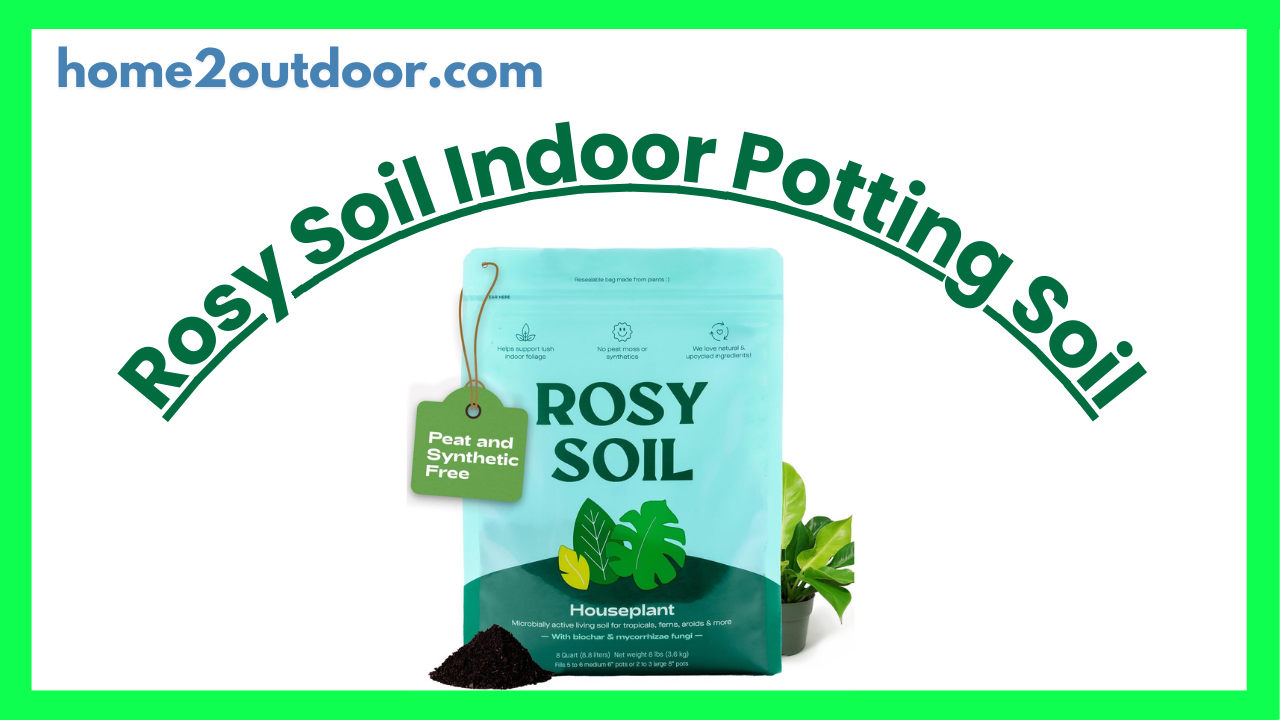
Here’s a detailed look at Rosy Soil Indoor Potting Soil (also called Rosy Indoor Potting Mix or Rosy Soil Houseplant Potting Mix), what makes it special, its strengths & weaknesses, and whether it might suit your indoor plants.
What Is It
Rosy Soil is a brand of indoor potting mix aimed at houseplants, herbs, tropicals, etc. Some of its key features:
- Peat‑free / synthetic additive‑free mix. Rosy avoids standard peat moss and instead uses more sustainable ingredients.
- Ingredients include biochar, vegan compost, pine bark fines, and mycorrhizal fungi / beneficial microbes.
- “Living soil” approach: It aims to support soil life (microbes / fungi) to help root health & nutrient uptake.
- Sustainability and packaging: The mix is sold in resealable, plant‑based or sugarcane‑based packaging; it claims to be carbon‑neutral (or even carbon‑negative in some aspects) in production.
What Users / Reviews Say
From users and product pages:
Pros:
- Plants seem to thrive; many reviews say foliage looks better, growth is good.
- Dark, rich appearance; soil is “light and fluffy” ‒ easier to work with.
- The inclusion of biochar and mycorrhizae is appreciated for the extra boost in root health and nutrient uptake.
Cons / Things to Watch Out For:
- Some users say it retains a lot of moisture, maybe too much for certain plants (e.g. those that require drier soil).
- A few reviews mention soil being a bit fine (less coarse or chunky), which might compact or reduce airflow if not amended for plants that need very well‐draining mix.
What Makes It Different / Strong Points
What sets Rosy Soil apart from many standard potting mixes:
- Peat-Free / Eco-Friendly Orientation
Peat moss is commonly used but its harvesting has environmental costs (carbon, ecosystem damage). Rosy substitutes that with biochar and compost, which are more sustainable. - Biochar Use
Biochar is carbon-rich charcoal that helps with drainage, aeration, moisture holding, and microbial habitat. It also helps sequester carbon. Rosy uses it in considerable amount. - Beneficial Fungi / Mycorrhizae
These support root system health by increasing root surface area and helping plants absorb nutrients & water more efficiently. - Texture & Structure
With pine bark fines etc., the soil has structure (not just fine particles) to help with root aeration and prevent compaction. Although some users still wish it had more coarse pieces for certain plants. - Packaging & Carbon Footprint
Rosy emphasizes sustainable, resealable packaging and aims for carbon neutrality or negative effects. If you care about environmental impact, this is a strong plus.
Best Uses / What Plants It’s Good For
Rosy Soil performs well (or is well recommended) for many houseplants, especially:
- Foliage plants like philodendron, pothos, ferns, tropical foliage.
- Flowers, herbs, small tropical plants.
- It’s less ideal for plants that strictly need very coarse, fast-draining soil (like certain succulents, cacti, or orchids) unless you amend it with more perlite, stone, or bark chunks. Some versions of Rosy do have such mixes (they have a “Succulent & Cactus” mix separate) for such plants.
Potential Weaknesses / Limitations
- Moisture Retention vs Drainage: For some plants, especially those that dislike “wet feet”, Rosy may hold moisture for longer than ideal. You may need to mix in extra coarse material (perlite, pumice, orchid bark) for such plants.
- Cost: Likely more expensive than generic potting soils because of the premium + sustainable ingredients. If you need large volumes, cost can add up.
- Availability & Transport: If you are outside major markets (e.g. US), shipping costs or import may make it less accessible or more expensive locally.
- Texture preferences: Some users prefer chunkier mixes (especially for aroids or large tropicals); Rosy seems more balanced rather than very chunky. For some plants, that means amending is needed.
Verdict — Is It Good?
Yes — Rosy Soil Indoor Potting Soil is a strong choice, especially if you care both about good plant growth and sustainable/ecological practices. It’s well suited for most houseplants, herbs, flowers, ferns etc.
However, whether it’s the best for your plants depends on:
- What species you grow (some want especially airy soil)
- Your watering habits (if you sometimes overwater, better drainage is very helpful)
- How much you want to spend and whether you can get it locally without high cost