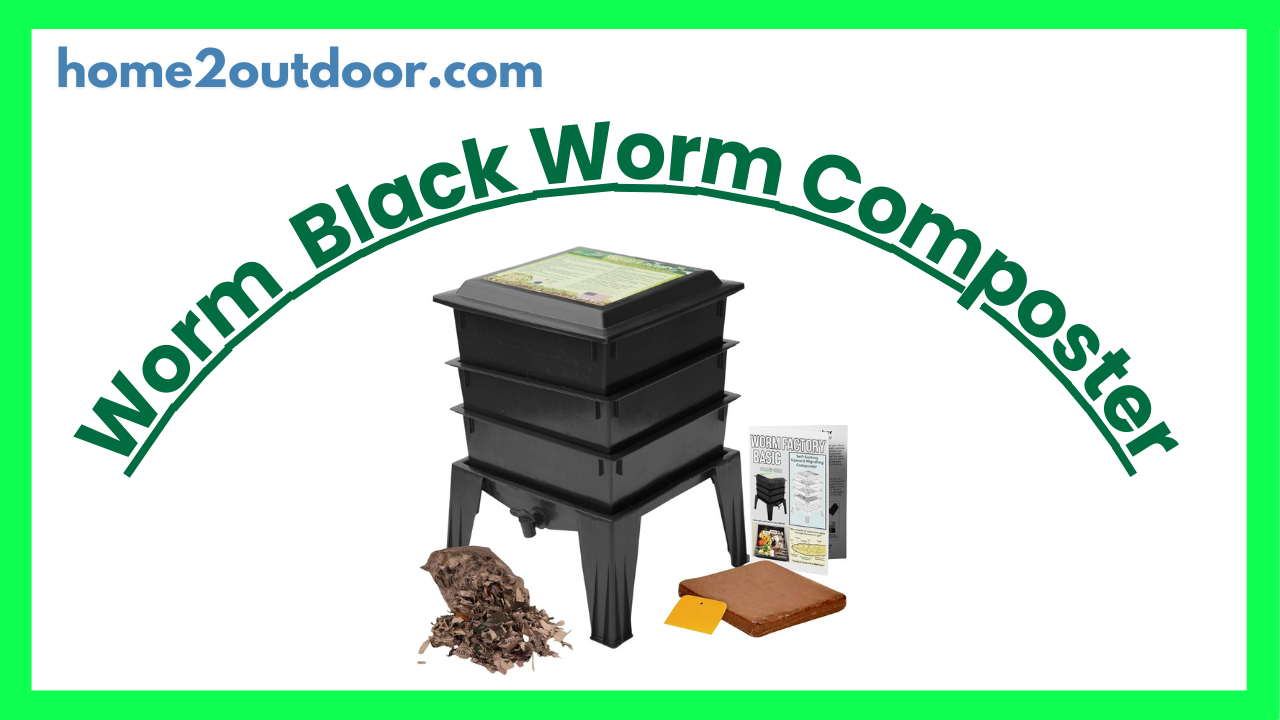
Here’s a detailed look at the Worm Factory® Basic 3‑Tray Black Worm Composter: what it is, how it works, its pros & cons, and whether it might be right for your situation.
What is it
The Worm Factory Basic 3‑Tray Black Worm Composter is a home vermicomposting system made in the U.S., designed to help you recycle kitchen food waste (vegetable scraps, fruit peels, coffee grounds, paper etc.) into worm castings (“vermicompost”) and worm tea.
Key specs and features:
- Contained setup: 3 stackable trays, with a base/stand including a “worm tea” collection tray and spigot for draining excess liquid (leachate).
- Materials: made from post‑consumer recycled plastic.
- Dimensions: roughly 16″ × 16″ × 21″ (for the 3‑tray system) in the full height.
- Capacity: It can accommodate thousands of worms (estimates ~8,000–12,000, depending on how much food you feed) which can process about 5‑8 lbs of food waste per week.
- Operational temperature: Works well between about 45°F to 95°F (~7°C to ~35°C). Outside that range, worm activity slows or may suffer.
- Warranty / Lifespan: 5‑year warranty on parts and workmanship; expected long lifespan (plastic parts, etc.).
Also includes (varies slightly by seller):
- Lid with “Quick‑Tips” instructions printed.
- Bedding to start (coir brick, shredded paper etc.).
- Spigot, worm ladder, and base tray for collecting leachate.
How it works (basic operation)
- You place bedding at the bottom tray, add worms, and start feeding food scraps. The worms eat the scraps, produce castings, and gradually migrate upward into higher trays as lower trays fill up with processed compost.
- Moisture drains down through the trays. Excess liquid (“worm tea” or leachate) collects in the bottom tray and can be drained via the spigot. Maintaining proper moisture is key: too wet = soggy, potential odors; too dry = worms suffer.
- Once the bottom tray or lowest tray has mostly finished compost (“castings”), it can be removed and harvested while the upper trays continue doing the work. Then you can add another tray on top (if you’ve bought extras) or re‑use the trays.
Pros / Strengths
Here are what users and specs say are advantages:
- Compact & space‑efficient
Because it’s a vertical stack of trays, it uses less floor space. Good for small homes, apartments, or small gardens. - Ease of harvesting compost
The stacking tray system allows you to harvest finished compost from lower trays without disturbing the active trays too much. Worms tend to migrate upwards when food is placed above. - Built‑in drainage / worm tea
The liquid drain/spigot enables you to collect nutrient‑rich leachate (“worm tea”) and prevents excessive moisture buildup which can lead to odors or drowning worms. - Good for beginners
The system comes with instructions, bedding, arranged for ease of use, and the parts are pre‑assembled or easy to put together. Many user reviews say beginners find it manageable. - Durable materials & warranty
Made with recycled plastic; comes with warranty; parts (trays, etc.) tend to be reasonably durable if cared for. - Odor control (if managed properly)
Many users say that when you follow the instructions (burying food, managing moisture, not over‑feeding), there are little to no odors.
Cons / Limitations / Challenges
No product is perfect. Here are some common criticisms or points to watch out for based on reviews:
- Limited surface area
Because each tray is not very large (square footprint), the area for feeding is relatively small. This limits how much waste you can introduce without causing over‑loading or moisture problems. - Lifting full trays can be heavy
As trays fill with compost, bedding, worms, and moisture, they become significantly heavy. Handling them (lifting off / re‑stacking) can be physically taxing. - Moisture management & leaks
If moisture isn’t well controlled (too wet bedding, too much food, not enough air), odors, mold, fruit flies, or worms trying to escape can occur. Some users report worms in the ladder area or escaping under lids when conditions aren’t optimal. - Requires attention/maintenance
It’s not entirely “set it and forget it.” Needs periodic checking: adding bedding, ensuring moisture, balancing food scraps, harvesting, preventing pests etc. If neglected, things can go bad. - Shallow depth of trays
The trays are relatively shallow, which means less depth for bedding and compost. This can affect how quickly compost matures and how consistent worm migration is. - Extra cost for expansion
If your waste exceeds what 3 trays can handle, you’ll need to buy additional trays (sold separately). That adds cost.
Who It’s Good For
The Worm Factory Basic 3‑Tray is especially suitable if:
- You produce moderate amounts of kitchen waste (fruit & veg scraps, coffee grounds, paper etc.), not huge volumes.
- You have limited space (balcony, porch, small yard, or even indoors if temperature can be maintained).
- You want to learn vermicomposting without too much complexity.
- You want both compost (for your plants) and the worm tea / liquid byproduct.
- You don’t mind some hands‑on care (managing moisture, harvesting, etc.).
When It Might Not Be Ideal
It might be less suitable if:
- You generate very large amounts of organic waste — might fill 3 trays too quickly or have trouble keeping up.
- Your environment is very hot or very cold, outside the 45‑95°F safe range (worms do poorly if it gets too hot or cold).
- You prefer extremely low‑maintenance composting methods (e.g. outdoor piles, tumblers, or DIY large bins).
- You have difficulty handling lifting full trays (elderly, limited strength etc.).
Tips to Use It Well
To get the best from it, here are some best practices:
- Start with the right number of worms for your waste levels. Don’t understock too much.
- Maintain good bedding (coir, paper, cardboard, leaves) to balance moisture and carbon content.
- Bury food scraps under bedding; avoid letting surface food rot exposed.
- Monitor moisture: the bedding should be moist like a wrung‑out sponge, not soggy or dripping.
- Ensure proper ventilation: the lid & tray stack need enough airflow.
- Harvest finished compost from the bottom tray when done, move castings to plants, and rotate trays.
- Use collected worm tea (leachate) on plants; beware it can be strong/dilute as needed.