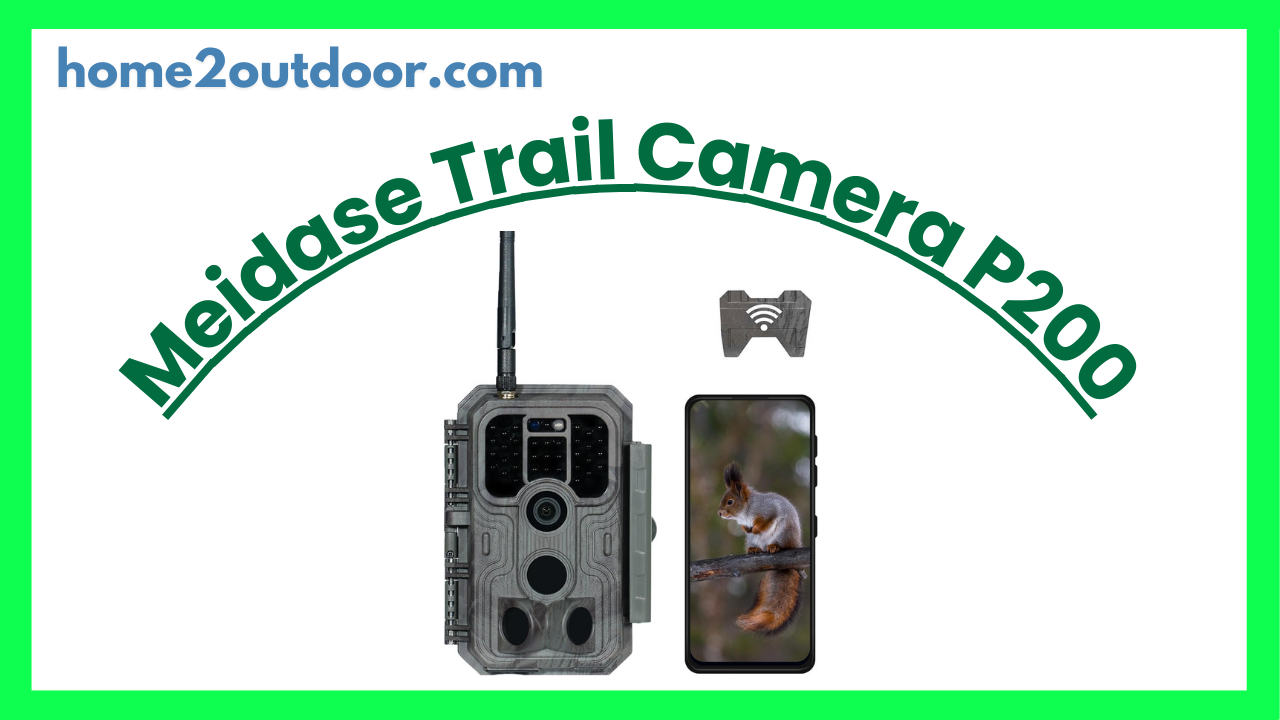
Here’s what I found out about the Meidase P200 Trail Camera — its capabilities, strengths, limitations, and what to watch out for. If you want, I can also check how suitable it is for use in Dhaka / Bangladesh.
What It Is
The Meidase P200 is a wildlife / outdoor “trail camera” designed for monitoring animals, game, wildlife, or general outdoor surveillance. It combines motion detection, night vision, storage, and wireless connectivity. It’s built to be weather resistant and “stealthy” (no‑glow IR, etc.).
Key Features & Specifications
Here are the main specs (according to manufacturer & user manuals) for the P200:
| Feature | Detail |
|---|---|
| Image / Video Quality | Still images up to 48 MP; video recording at 1296p (and also 1080p) using H.264 encoding with sound. |
| Night Vision | No‑glow (invisible IR) night vision up to ~100 ft (~30 meters) using invisible 940nm LEDs. |
| Trigger Speed & Motion Detection | Very fast trigger speed (~0.1 seconds) using three PIR sensors, wide detection (advertised up to ~90‑100 ft for motion detection depending on setting) and with the option to disable side sensors for fewer false triggers. |
| Connectivity | WiFi & Bluetooth, external antenna for improved signal. App (“Meidase Mobile”) lets you set up the camera, view and download images/videos without removing SD card |
| Display / UI | 2.4‑inch color LCD screen for menu navigation, reviewing captures, etc |
| Power / Batteries | Runs on 8 AA batteries (manufacturer recommends alkaline or lithium). Also has a 12V DC input for external power (some listings). |
| Storage | Supports SD card (various sources say up to 512 GB in some versions) to store images/videos. |
| Durability / Weatherproofing | IP66 rating: water‑ and dust‑resistant (not necessarily submersible). Rugged housing, latch / seal to protect against moisture. |
| Physical Specs & Misc | Comes with mounting strap, external antenna, USB cord. Adjustable settings (resolution, video length, PIR sensitivity, IR flash etc.). Operating temperature range wide (some sources: from ~‑20°C up to +60°C). |
Strengths / What It Does Well
From both specified features and user‑reports, here’s what people like about the P200:
- Fast trigger and recovery: The 0.1s trigger speed helps capture fast movement (animals, intruders) before they flash by.
- Good night performance with stealth: The “no‑glow” IR means less chance of spooking wildlife; night vision reach is significant.
- High resolution & decent video: The high still image resolution (48MP) is attractive for detail; 1296p video is better than standard 720p for many applications.
- Connectivity & usability: Having WiFi/Bluetooth + external antenna + app control means less need to physically retrieve SD card every time; can review remotely.
- Weather resistance: IP66 rating and rugged build make it more reliable outdoors. Some user reports also praise battery life under moderate usage.
Limitations / What Users Say Could Be Better
No device is perfect — here are drawbacks or caveats people have raised:
- False triggers / detection inconsistencies: Some users say that in practice, the trigger speed or detection range varies; side PIR sensors may produce false positives, or detection distance advertised is optimistic.
- Night overexposure at close range: When objects are very close, the IR flash or illumination can wash out the image or cause glare.
- Large external antenna: The antenna helps signal but adds bulk; may need careful placement or mounting to avoid it being snagged or broken.
- Seal / moisture issues: A few reports of moisture ingress causing malfunction or false triggers. Even with IP66, proper sealing, maintenance, and checking latches are important.
- Battery usage depends heavily on usage pattern: Often, the battery life claimed depends on moderate trigger frequency; frequent night shots + frequent triggers will use batteries more quickly. Use of side sensors etc. affects battery consumption.
Good Scenarios / Use Cases
Here are situations where the P200 is a good pick:
- Wildlife monitoring in forests, farms, etc., especially at night where stealth (no‑glow IR) is valuable.
- Perimeter / property security in outdoor areas where you don’t mind retrieving SD card occasionally but want remote preview via app.
- Camera traps / nature photography for animals/birds etc.
- Long‑term outdoor deployment where weather resistance is necessary.
Things to Check / Best Practices Before & During Use
If you consider using this camera, here are things to confirm / do to get best performance:
- SD card quality & size: Use a fast, durable SD card (Class 10 or better), and enough capacity. Periodically format it in the camera.
- Use good batteries: Lithium AA or high quality alkaline; keep spares. If many triggers/night shots, battery will drain faster.
- Positioning & mounting: Place where side PIR sensors are oriented properly; avoid direct exposure to sunlight, strong reflections; ensure lenses / LEDs are free of dirt and vegetation.
- Seal & weather protection: Ensure all latches are securely closed; consider mounting under partial overhang if heavy rain is common.
- Adjust sensitivity / disable side sensors when needed: If false alarms are frequent, turning off side PIRs or reducing sensitivity helps.
- Firmware / App updates: If updates are available, use them. Check app stability, and whether the wireless connection works reliably in your field location.
Verdict
The Meidase P200 is a relatively feature‑rich trail camera for its price. It offers high resolution, fast trigger speed, good night vision, remote control via Bluetooth/WiFi, rugged build and weather resistance. For many users, especially outdoors or wildlife watchers, it will do well.
If you are in Dhaka or a region with heavy rain, high humidity, or rough climates, you’ll need to pay attention to sealing, battery supply, and whether connectivity (if you rely on WiFi/Bluetooth) will work in your terrain. But overall, it’s a solid contender.