Here’s a detailed review of the PNY NVIDIA GeForce RTX 5060 Ti (Epic‑X ARGB OC Triple Fan) (or similar high‑end custom variants) — what it offers, where it shines, its shortcomings, and whether it’s a good buy for you.
⚠️ Note: As of now, independent reviews of that exact “Epic‑X ARGB OC Triple Fan” variant are limited (it may not have been covered widely yet). So a lot of this is based on known performance of the RTX 5060 Ti, plus what to expect from a custom high-end model with triple fans and factory overclock. Treat this as an informed projection plus caveats.
What We Know: RTX 5060 Ti in Brief
To understand what a PNY custom version will deliver, here’s what reviewers say about the base RTX 5060 Ti:
Strengths
- It delivers very strong 1080p performance and solid 1440p performance when paired with DLSS 4 / AI frame generation.
- The move to GDDR7 memory gives a large bandwidth boost compared to the older 4060 Ti, which helps in texture/VRAM‑heavy scenarios.
- In content creation / compute tasks, it shows noticeable gains over previous midrange GPUs, e.g. ~37 % better Blender performance compared to 4060 Ti in some tests.
- Efficiency is decent: the card tends to draw moderate power under load (well under worst-case TGP) and temperatures/noise are generally manageable.
Weaknesses / Trade-offs
- Without DLSS / frame generation, in demanding ray‑tracing modes, performance dips significantly. It relies on the AI upscaling features for higher resolutions & heavier rendering.
- Competitive multiplayer / max settings in very demanding titles can struggle. Latency and frame consistency are weaker in extreme cases.
- Pricing and availability are a concern — some reviewers note that at inflated prices, the performance gains may not justify the cost.
- Some workloads (Blender, encoding, etc.) may lag behind GPUs more optimized for compute tasks.
What a High-End Variant like “Epic‑X ARGB OC Triple Fan” Should Offer
Given it’s a custom model with a triple-fan cooler, ARGB lighting, and factory overclock, here’s what you can reasonably expect:
Likely Pros
- Better cooling & lower thermals: Triple‑fan designs tend to offer better heat dissipation and more cooling headroom under load. This helps maintain higher boost clocks, especially during longer sessions.
- Higher factory overclock: The “OC” label suggests it will have a clock bump over the reference / stock model, giving some extra performance without manual tweaking.
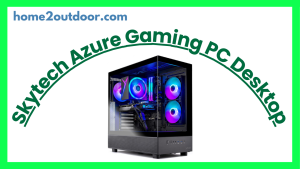
- Aesthetics & RGB: The ARGB lighting and aggressive shroud design should appeal if you want a visual centerpiece in a build with a glass side panel.
- Quieter operation under load: With more fans and potentially more cooling capacity, the custom cooler may stay quieter when gaming compared to dual‑fan or reference designs (depending on fan curve).
- Better power handling / component quality: Custom versions often use more robust VRMs, better capacitors, and better cooling phases, which may improve longevity and stability when pushed.
Potential Downsides / Risks
- Diminishing returns: The extra performance from a triple fan + factory overclock may be modest — for many games, you might only see a few percent higher FPS vs a well-cooled dual-fan variant.
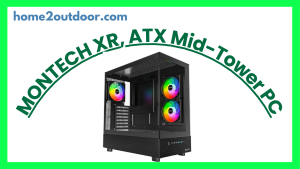
- Size / clearance: Triple-fan cards are generally large (in length, height, or width). You’ll need to check whether your PC case and cooling setup allow enough room (clearance, airflow).
- Price premium: Custom / premium variants often cost significantly more than “reference” or simpler versions. That extra cost might make the per‑frame gain less attractive.
- Power draw / cooling demands: Higher clocks and more aggressive fan profiles may push power and cooling demands higher; ensure your PSU, chassis airflow, and thermal solution are up to the task.
- Noise at high loads: Depending on fan profiles, all three fans may spin up under full load, possibly producing more sound than a dual‑fan solution in some cases.
Performance Expectations (Based on Tests + Projection)
Here’s how I expect the PNY Epic‑X OC triple-fan version to fare, combining what we know about 5060 Ti plus the enhancements from a strong custom cooler:
| Use Scenario | Expected Experience |
|---|---|
| 1080p Gaming (High / Ultra settings) | Very smooth. You should hit high frame rates well above 100 fps in most eSports and AAA titles. The overclock + better cooling will allow more stable boost behavior. |
| 1440p Gaming (High / Ultra + DLSS upscaling) | Playable to excellent. With DLSS 4 / frame generation, many titles should push into comfortable FPS even in demanding scenes. Without upscaling, some titles may require some settings tweaks. |
| Ray Tracing / RT & Path Tracing | It will struggle if you push ray tracing heavily without DLSS support. In titles that support DLSS + frame generation, you’ll get acceptable results, but in pure RT modes performance will be significantly lower. |
| Content Creation / Compute / Rendering | Gains over previous mid-tier GPUs. You’ll see better results in GPU-accelerated tasks (video editing, 3D work) compared to older or weaker models. But it won’t replace top-tier workstation GPUs. |
| Power & Cooling | With a solid custom cooler, the card should run cooler and allow more sustained boost clocks. But it will still need adequate case ventilation and a good PSU headroom. |
| Value for Money | If priced decently (i.e. not severely marked up), the extra cooling and styling may justify the cost. But if the premium is too high, you may get better value from a simpler version or alternate GPU. |
Final Thoughts & Recommendations
Who this card is great for:
- You want a high-performance mid-to-upper mid-tier GPU that can comfortably handle 1080p and 1440p high/ultra play, especially with DLSS / frame generation support.
- You value good aesthetics — ARGB, triple-fan cooler, visual appeal matters to your build.
- You plan to keep the card for several years and want better cooling, stability, and longevity.
- You have or can support appropriate case space, PSU wattage, and airflow to fully utilize the card.
What to watch out for / double check before buying:
- Case & clearance: Make sure your case supports a long / tall triple-fan GPU (length, height, PCIe slot spacing).
- PSU quality & wattage: Ensure your power supply has enough wattage and quality (good efficiency, stable rails) to handle peak loads + room for upgrades.
- Cooling / airflow: Good intake / exhaust airflow is needed so the GPU cooler doesn’t become a bottleneck.
- Driver & BIOS / firmware updates: When new architectures arrive, there can be firmware / BIOS / driver updates required for stability (especially for new GPU families).
- Price comparison: Compare the premium of this Epic‑X OC model vs simpler variants. Often the cooling + aesthetics cost extra — make sure that extra cost is worth the incremental performance or longevity for you.