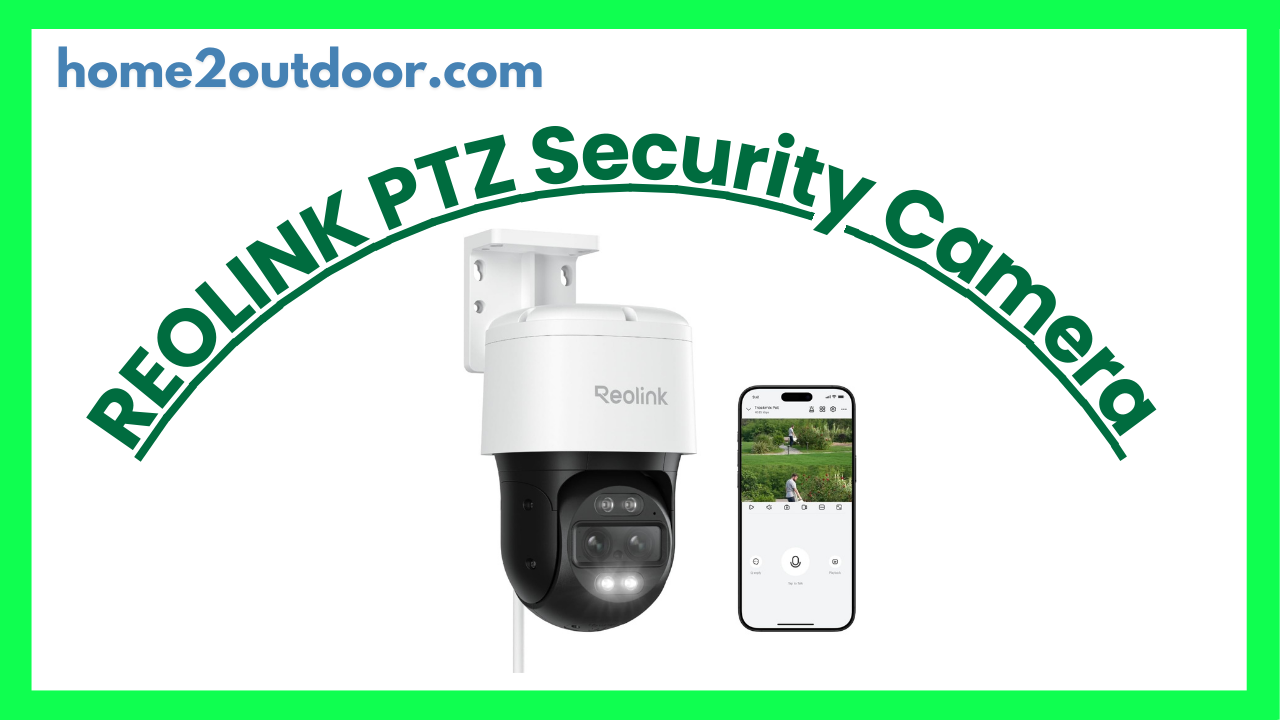
Here’s a fairly detailed summary of Reolink PTZ Security Camera Systems — what “PTZ” means in Reolink’s lineup, what the strengths are, what trade‑offs to expect, typical specs, and which kinds of uses it’s good (or less good) for. I can also pull up a few model examples if you want to compare.
What “PTZ” Means & Why It Matters
PTZ stands for Pan‑Tilt‑Zoom. A PTZ security camera can:
- Pan — rotate horizontally (turn left/right), often up to ~360°
- Tilt — rotate vertically (up/down) over some angle (often ~90°)
- Zoom — optically (and/or digitally) zoom in to see detail, or zoom out for a wide view
This capability allows one camera to cover a larger area, track movement, zoom in on interest, etc., rather than using many fixed cameras.
Reolink has a series of PTZ cameras (in its “TrackMix”, “E Series”, etc.) which combine PTZ with other features like auto‑tracking, smart detection, spotlights/flashlights, etc.
Key Features / Typical Specs of Reolink PTZ Systems
Here are what many of the Reolink PTZ cameras offer, or what you can expect from a “good” PTZ system in their lineup:
| Spec / Feature | What Reolink PTZ Cameras Often Provide |
|---|---|
| Resolution | 4K (≈ 8MP) in many models (TrackMix 4K UHD) or 5MP in some others. |
| Optical / Hybrid Zoom | Ranges from ~3× optical to 5× optical, sometimes with hybrid or digital zoom to go further. |
| Pan / Tilt Range | Usually ~360° pan (full left‑right rotation), tilt about 90° (up/down). Some models have limits or presets. |
| Night Vision / Color Night Vision | IR night vision for dark, plus many models have spotlight / built‑in lights so you can have color images at night under lighting. |
| Smart Detection | Ability to distinguish people, vehicles, pets; auto‑tracking (follow moving subject) in many models to reduce false alarms. |
| Power & Connectivity | Many are PoE (Power‑over‑Ethernet) which simplifies wiring (one cable for power + data). Others are plug‑in. Some dual‑band WiFi + PoE depending on model. |
| Storage | Support for microSD (often up to ~256 GB), NVR compatibility, FTP, etc. Some models allow 24/7 continuous recording, motion‑based, scheduled, etc. |
| Outdoor / Weatherproofing | Many PTZ Reolink cameras are built for outdoor use: rugged housing, IP65/IP66 ratings. |
| Two‑Way Audio | Mic + speaker in many cameras so you can listen + talk via the camera. |
What It Does Well / Strengths
Here are strengths / advantages of using Reolink PTZ systems:
- Wide coverage with fewer cameras
Because of pan, tilt, zoom, a single PTZ camera can cover a large area, reducing number of cameras needed. - Flexibility & Tracking
If something moves, many models can automatically follow (people / vehicles), helping to keep subject in view without manual control. - Detail when needed
Zoom allows you to examine finer details—license plates, faces—when needed, without sacrificing wide‑angle when “scanning”. - Outdoor durability
Many models are built for external installation; good weather proofing helps. - Multiple storage / recording options
microSD, NVR, etc., means you can choose how to store footage; 24/7 or only on motion etc. - Smart detection reduces false alarms in many models — by recognizing people/vehicles/pets vs just any movement.
Trade‑Offs / Things to Watch Out For
But PTZ cameras also have disadvantages / things you need to plan for. Some downsides or practical limitations:
| Issue | Details / What to Check |
|---|---|
| Cost & Complexity | PTZ systems are more expensive than fixed cameras, both in price and maintenance. Motors, moving parts, lenses etc. add cost. |
| Power & Connectivity Demand | PoE helps, but for high‑resolution + continuous operation + pan/tilt motor use, you need stable power and good network capacity. |
| Mechanical wear | Moving parts can fail or degrade over time (motor wear, dust, moisture ingress), especially outdoors. |
| Field of view “gaps” | While PTZ can pan, tilt etc., there are moments when nothing is captured (during repositioning etc.). Not perfect as always‑on coverage everywhere. |
| Night performance | Zooming in under low light tends to degrade image. IR vs spotlights have tradeoffs: IR makes black/white, spotlights give color but need light and use power. |
| Data/storage requirements | Higher resolutions + frequent movement = lots of data. Need good storage/media. Also, remote streaming uses bandwidth. |
| Latency / response | Auto‑tracking may lag, or tracking may lose the subject if movement is sudden or speed high. |
Example Models
To give concrete examples, here are some Reolink PTZ models with standout features:
- Reolink TrackMix PoE 4K UHD Dual‑Lens PTZ — 4K resolution; dual lens (wide + zoom); night vision up to ~50 ft; 2.8mm & 8mm lenses
- Reolink RLC‑823A Smart 8MP PTZ PoE — 5× optical zoom; 360° pan, 90° tilt; good night vision; spotlight + IR; smart detection; large microSD support.
- Reolink E560P — 4K PTZ PoE with 3× optical zoom; auto‑tracking of people/vehicles; IP‑rated housing; support microSD, NVR storage etc.
Which Use‑Cases It’s Best For
Here are situations where Reolink PTZ security systems are a good match:
- Large outdoor areas: yards, driveways, parking lots, campus, perimeter fencing.
- Wanting fewer cameras but want ability to zoom in where needed.
- Areas without constant supervision, where you want automatic tracking / alerts.
- Situations where you want both wide view + detail (e.g. wide gates + zoom for license plates).
When You Might Choose Something Else
- If all you need is fixed, static view (like door entry), a simpler camera might suffice.
- If you have many small rooms rather than large open areas, multiple fixed cams might cover better.
- If budget is tight or want minimal maintenance (PTZ parts need occasional upkeep).
- If you need more discreet cameras (PTZ tend to be more visible / noticeable).