Here’s a detailed overview of the X‑Sense Smart / Wi‑Fi Water Leak Detector (models like SWS0A, SWS51, SWS54, especially when used with the SBS50 Base Station), including its capabilities, strengths, limitations, and likely suitability. If you want, I can try to find local availability/prices in Bangladesh.
What It Is
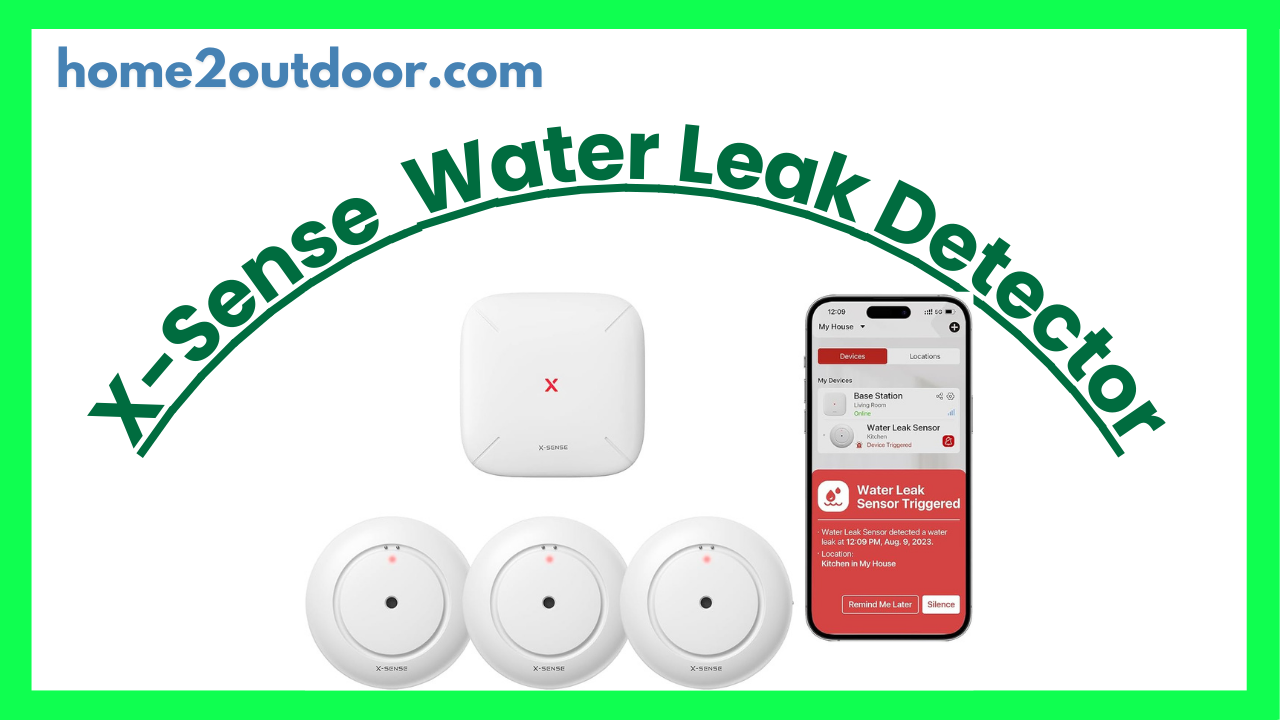
The X‑Sense water leak detector is a smart sensor setup designed to detect small leaks or pooling water, send alerts to your phone, and sound local alarms. It works as part of the X‑Sense Home Safety / Home Security ecosystem using the SBS50 Base Station.
Several kits exist (1‑sensor, multi‑sensor) depending on how many places you want to monitor. Models include SWS0A, SWS51, etc.
Key Features & Specifications
Here are the important specs and what the device can do:
| Feature | Detail |
|---|---|
| Detection Sensitivity | Equipped with dual sensing probes: 2 on the top and 4 on the bottom of the sensor. Can detect water as shallow as 0.4 mm (≈ 0.015 in) and also detect drips. |
| Alarm Sound Level | Between 100‑110 dB depending on model / whether alarm is sounded from base station + sensor. Pretty loud; designed to be heard. |
| App Integration | Works via the X‑Sense Home Security app. You receive push notifications when a leak is detected, can view history, set up muting / “Remind Me Later” for nuisance alerts, test devices remotely, share device access with family members. |
| Base Station (SBS50) | Required for many functions. The base station handles the major alerting, integrates multiple sensors, connects to the app over Wi‑Fi (2.4 GHz) and has its own loud speaker alarm (~100 dB). |
| Wireless / Range | Sensors communicate with the Base Station via a wireless protocol (often using a sub‑GHz RF band, e.g. ~915 MHz US / 868 MHz EU). Open‑air range up to ~500 meters (≈ 1,640‑1,700 ft). Between Base Station and router, Wi‑Fi range is ~50 m (~160‑170 ft). |
| Battery Life & Power | • The sensor units run on 2 AAA batteries, which are replaceable. Batteries are included in kits. • Battery life for the sensors is about 3 years, with overall device lifespan around 5 years (assuming battery changes). x- |
| Water / Weather Resistance | IP rating depends on model: some are IP66, some IP67. This allows usage in humid or wet areas, close to appliances, etc. But it is not for full immersion (in many cases) or underwater use. |
| Dimensions / Design | Ultra‑slim designs (for instance ~0.7 in / 17 mm thick, ~3 in / 77 mm diameter for certain models). Compact, can fit in tight spaces. Probes extend slightly below the base. |
| Alarm / Alert Controls | You can mute alarms (via app or directly), test devices, get low battery alerts. There’s also a “Remind Me Later” function so you can postpone repeated alerts for short times (10 min up to 12 hr) if desired. |
Strengths (What It’s Good At)
- Very sensitive detection: Because it can detect very low water levels and even drips, it helps catch leaks early before serious damage.
- Strong alerts: Loud enough to be heard in many environments; paired with app alerts means you won’t miss it even if you’re away.
- Smart app features: Being able to adjust alarms, mute, test, get history, share with family adds convenience.
- Good wireless range: Helps cover large homes or remote areas (basements, far‑away utility rooms) as long as signal path is reasonable.
- Durability in humid / wet areas: IP rating (IP66/67) helps protect the device in common leak sources (under sinks, around water heaters, behind appliances) though proper placement still matters.
- Modular / scalable: You can have multiple sensors connected to one base station, so you can monitor many high‑risk points.
Limitations & Things to Be Careful About
- Need for Base Station: The system’s full functionality (app alerts, centralized warnings, Wi‑Fi connectivity) requires the SBS50 base. If that is offline (power cut, Wi‑Fi down), alerts may be delayed or local only.
- Wi‑Fi Compatibility: Base Station uses 2.4 GHz Wi‑Fi. If your home is using only 5 GHz, or the Wi‑Fi router is far or weak, connection issues may appear.
- Powering Base Station: The Base Station needs AC power. If that’s interrupted (power failure), alarms at sensors may sound locally but remote notifications may fail.
- Sensor Placement: Placement is important. For example, the sensor must be flat on surface, not upright; probes must contact or be near water flow. If the surface is not even or the sensor is tilted, false negatives can happen. Humidity / condensation can cause false positives if placed poorly.
- Alarm Location vs Leak Location: Even with loud alarms, if the leak is in a remote corner (basement, behind walls, etc.), you may need to place sensors very close to likely leak sources.
- Battery Replacement: Though 3‑year battery life is good, eventually you’ll need to replace AAA batteries. If sensors are in hard‑to‑reach places, that can matter.
- Environmental Limits: Operating temperature and humidity ranges are specified; extreme cold/hot or very high humidity might exceed specs and impact performance.
- Not for immersion: Even with IP66/67, these are not designed to be fully submerged permanently.
Use Cases Where It Shines
- Kitchens and under sinks
- Behind/water heaters, boilers
- Laundry rooms (washing machines, tumble dryers)
- Basements / crawlspaces prone to flooding
- Near water pipes, joints, valve areas
- Vacation homes or remote properties, where early detection + remote notification are important
Possible Downsides / Considerations for Bangladesh or Similar Environments
- Frequent power cuts might affect the base station’s uptime, reducing reliability of remote alerts.
- High ambient humidity or condensation could cause false alerts if sensors are placed poorly.
- AAA battery availability is generally okay but check that you can easily source good quality ones locally.
- Dust, grime, or corrosion on the probe contacts may degrade sensitivity over time—especially in areas with hard water or high mineral content.